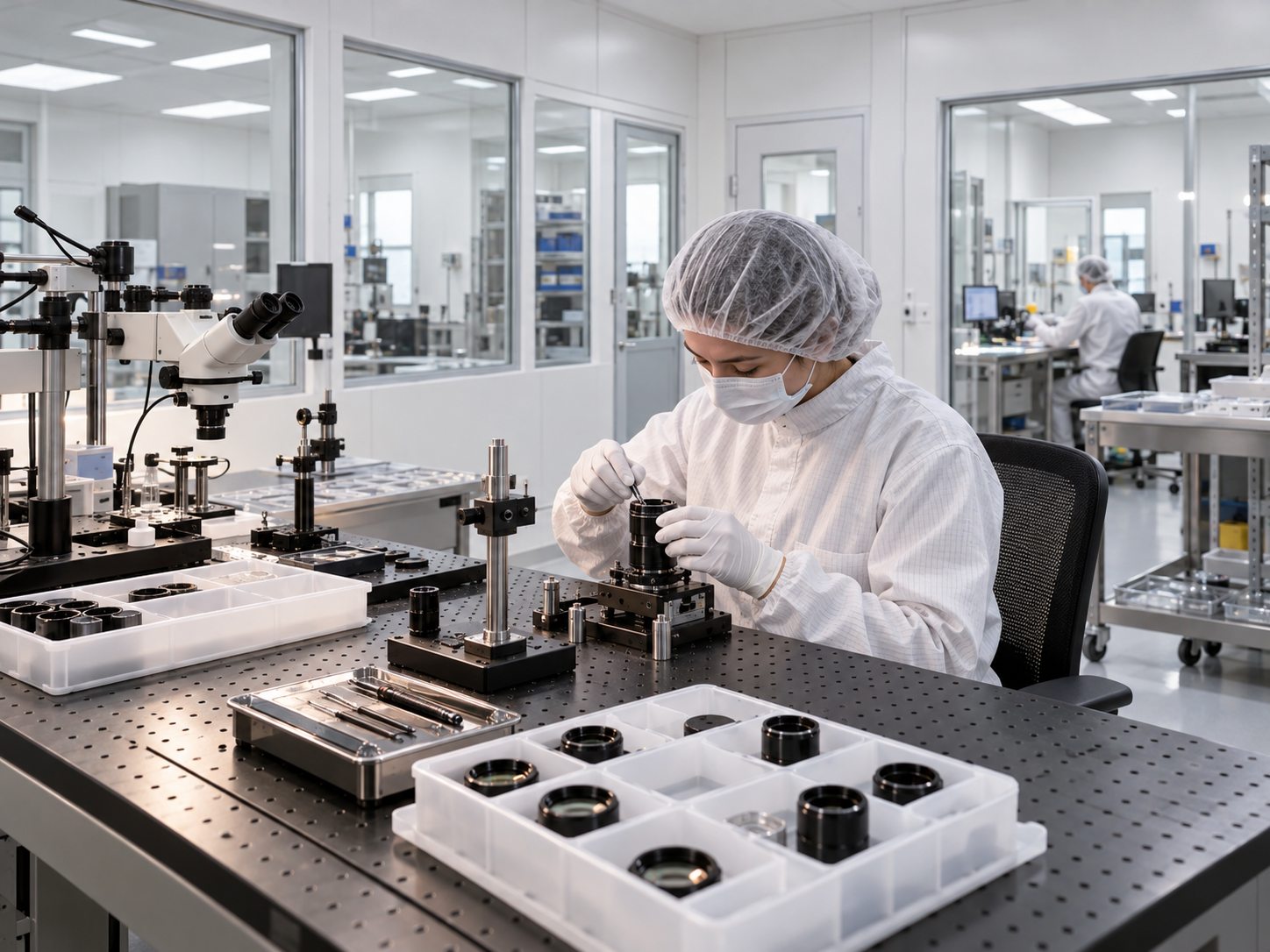
Precision Optics Assembly
Plan clean handling, assembly benches and protected transfer routes for lenses, mirrors and optical subassemblies.
Discuss This Application ↗
Industry Solutions / Optics & Photonics
An optical assembly cleanroom enclosure coordinated with handling, inspection and equipment access. Match panel surfaces, openings and service interfaces to the component and its approved environmental requirements.
4 Application Areas
Start with the optical task. Assembly, device packaging and inspection create different room, handling and equipment interfaces.
Plan clean handling, assembly benches and protected transfer routes for lenses, mirrors and optical subassemblies.
Discuss This Application ↗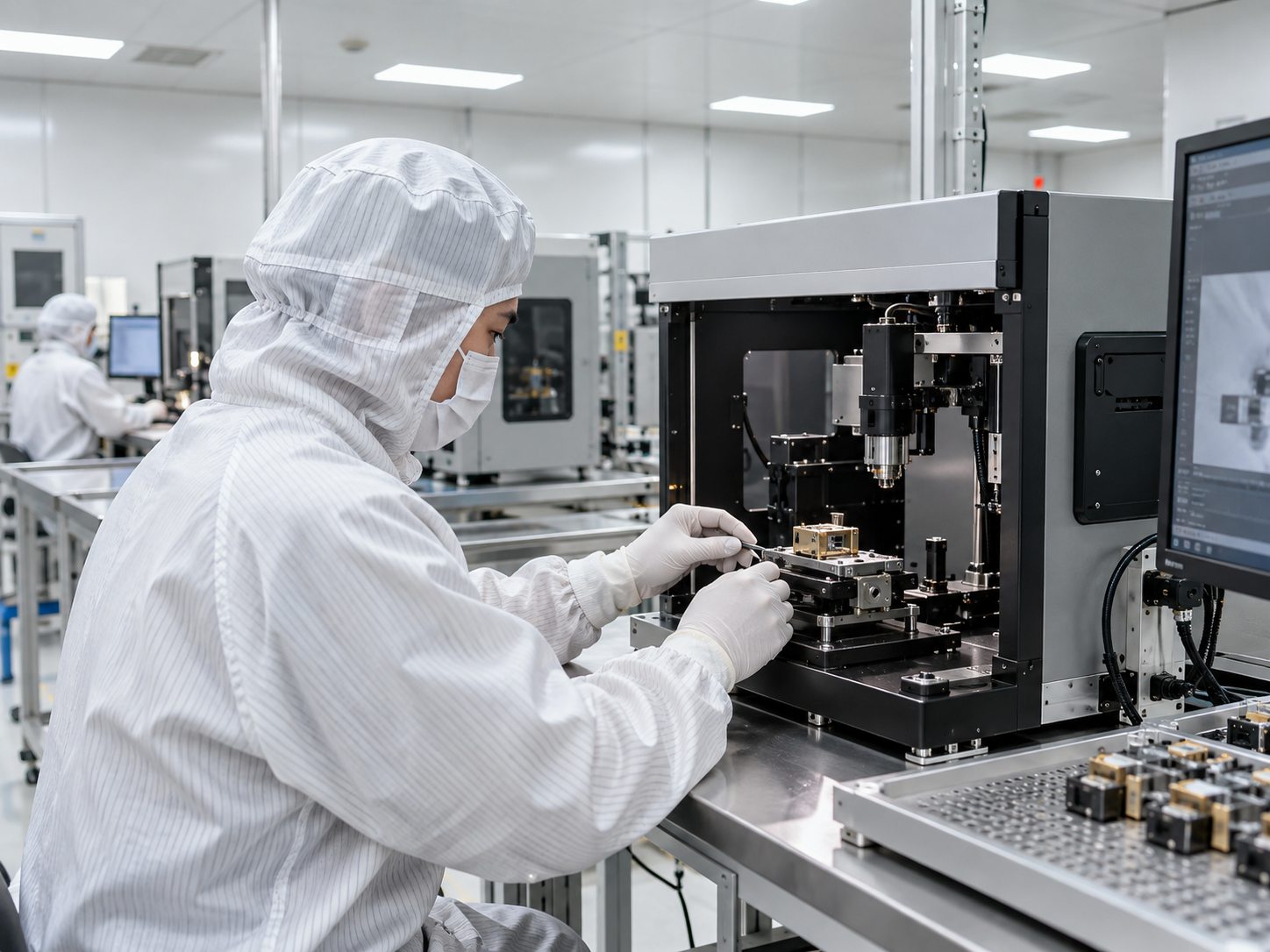
Coordinate assembly space, service access and room conditions around the module and its manufacturing sequence.
Discuss This Application ↗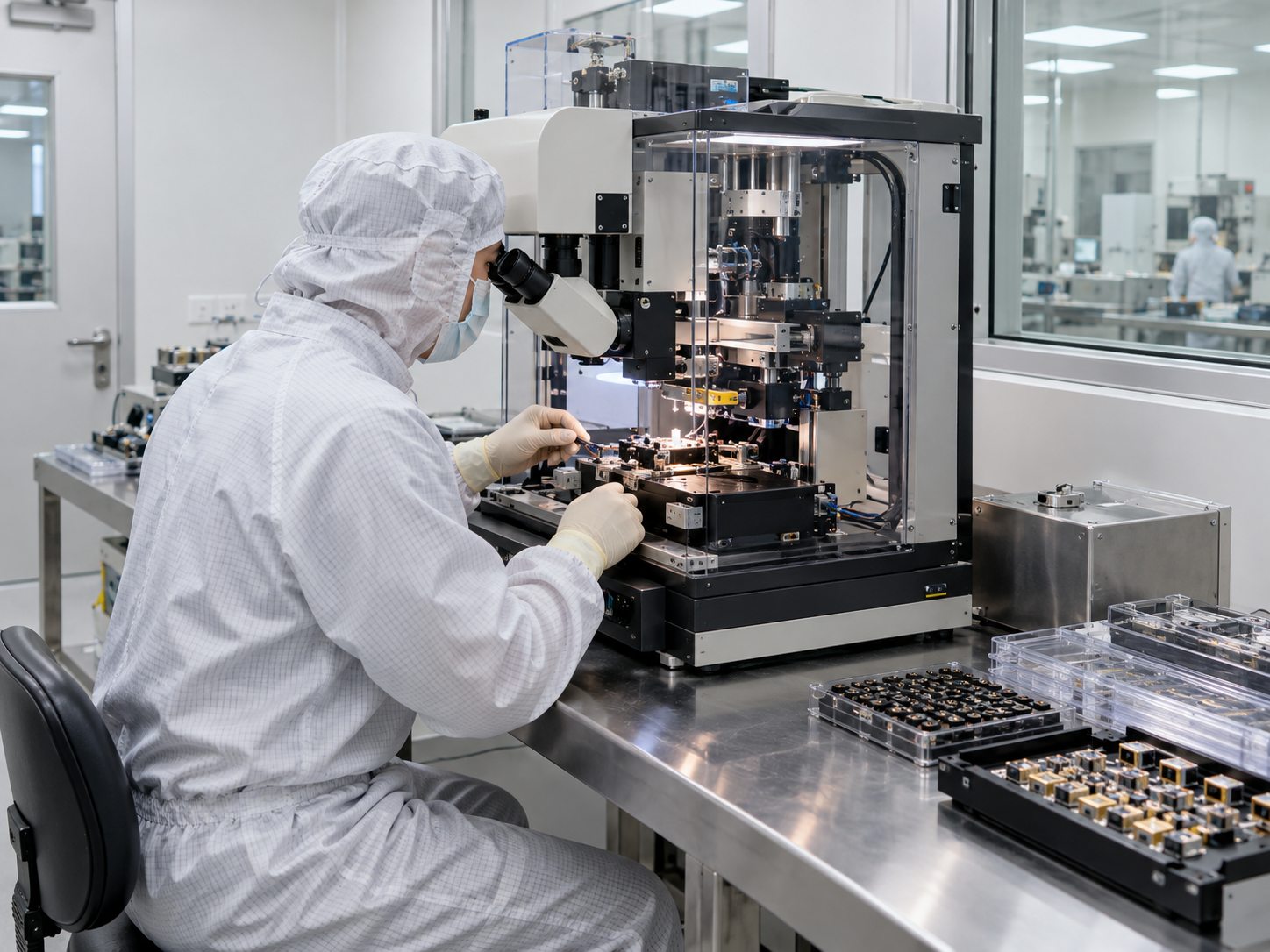
Review die handling, alignment, packaging and equipment access for the defined photonic-device workflow.
Discuss This Application ↗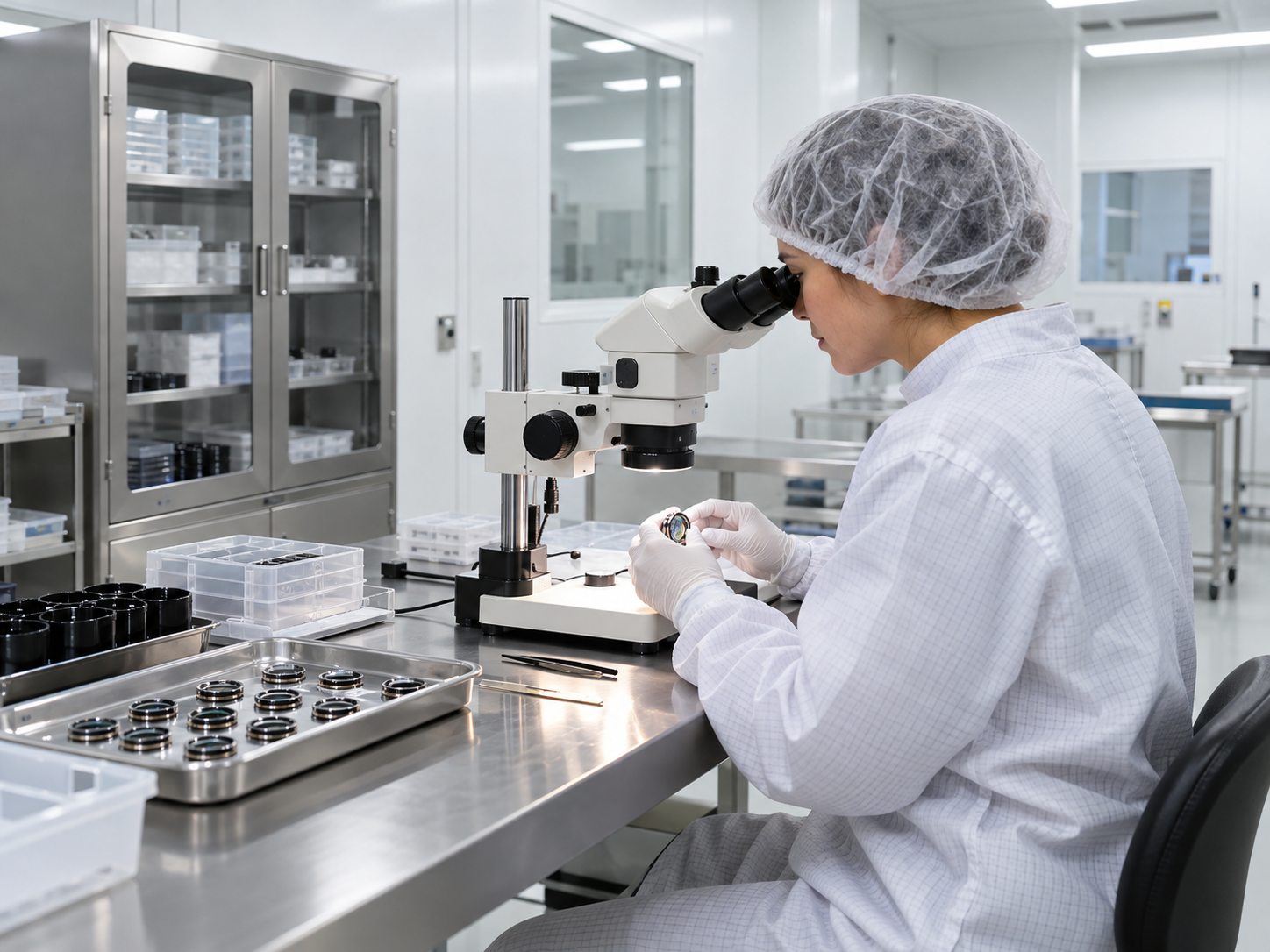
Arrange inspection, cleaning, staging and packaging areas around component sensitivity and approved handling procedures.
Discuss This Application ↗Workflow Before Specification
Connect the activity, people, materials and services before choosing the enclosure details.
Adapt these topics to the actual workflow and approved project design.
Define airborne-particle and component-surface requirements separately; review molecular contamination where relevant to the optical system.
Confirm temperature, humidity and stability targets with the equipment and process teams rather than applying a universal specification.
Coordinate utilities, maintenance access and independently designed equipment or vibration-isolation supports.
Plan entry, clean staging, transfer openings and packaging access to limit unnecessary component handling.
Optical requirements depend on the component, wavelength, process and contamination-control brief. Airborne particles, surface particles and residues are distinct considerations. Molecular-contamination controls are process-specific, not a universal requirement for every optics room. Panel selection alone does not establish optical performance, cleanliness classification or vibration isolation.
Enclosure & Engineering Interfaces
Materials, interfaces and responsibilities are confirmed for the project.
Start with the enclosure. Agree the wider scope before quotation.
Optical benches, alignment tools, laser systems, inspection instruments and vibration-isolation systems need separate specifications and responsibility allocation. Laser-safety and process requirements must be reviewed by the responsible specialists; this machinery is not included by default in an enclosure order.
Inclusion, performance and responsibilities must be stated in the project proposal.
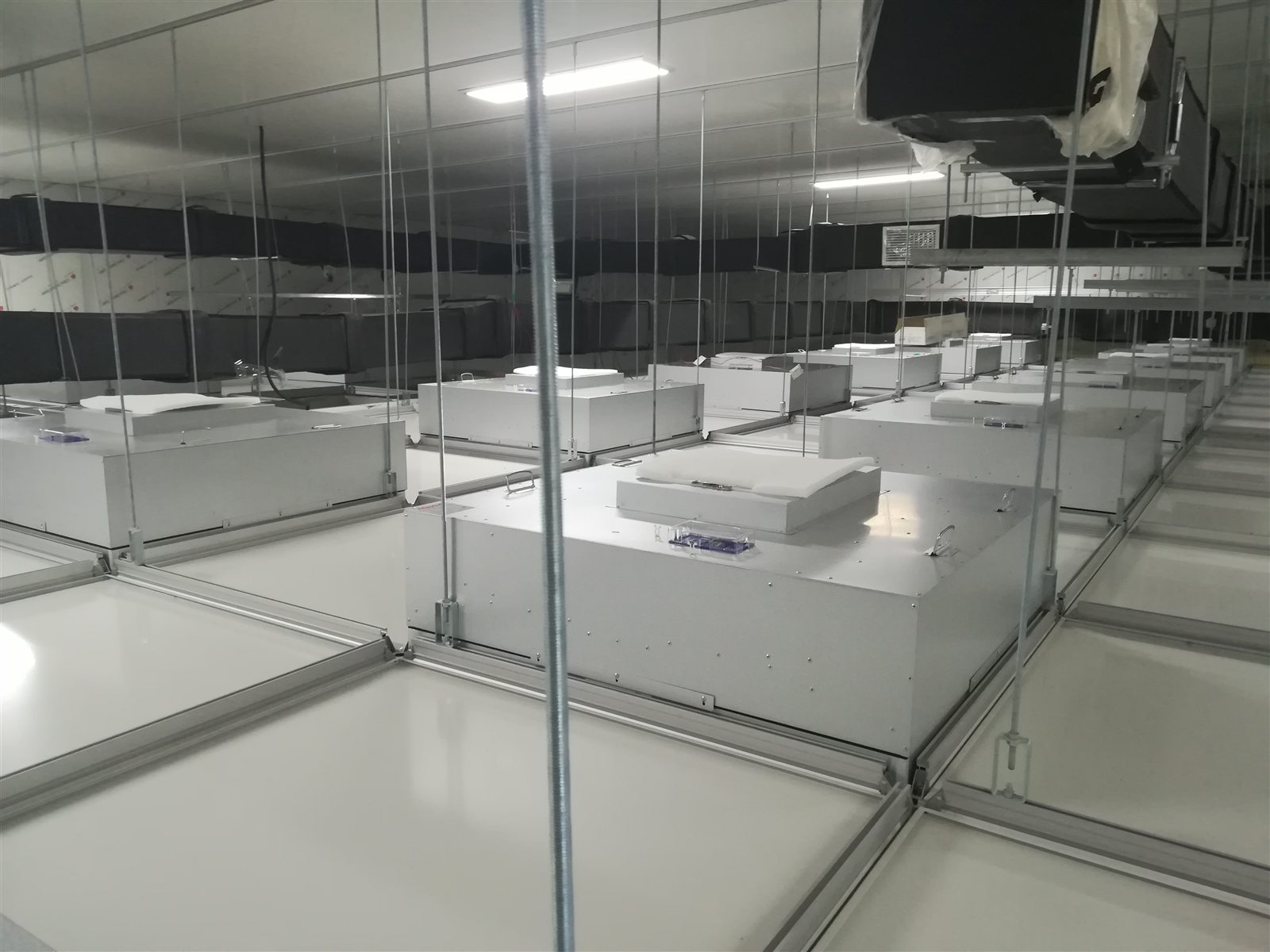
Coordinate panel format, facing, core, finish, openings and supports with the room layout.
Explore Panels ↗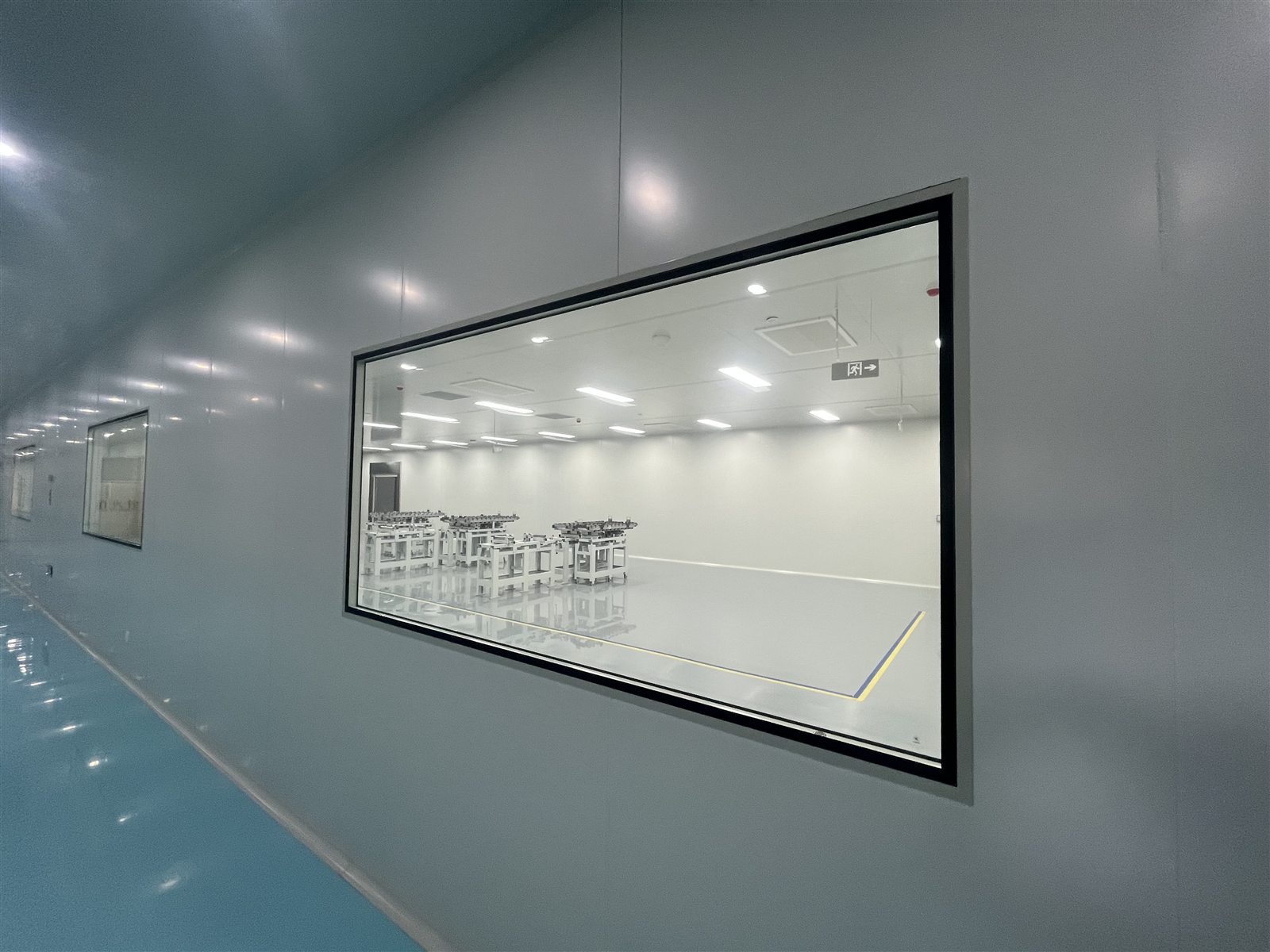
Plan access, visibility, frames and sealing details around people, materials and equipment.
View the Common System ↗Resolve corners, floor connections and service penetrations with the responsible designers.
Explore Project Planning ↗Optical requirements depend on the component, wavelength, process and contamination-control brief. Airborne particles, surface particles and residues are distinct considerations. Molecular-contamination controls are process-specific, not a universal requirement for every optics room. Panel selection alone does not establish optical performance, cleanliness classification or vibration isolation.
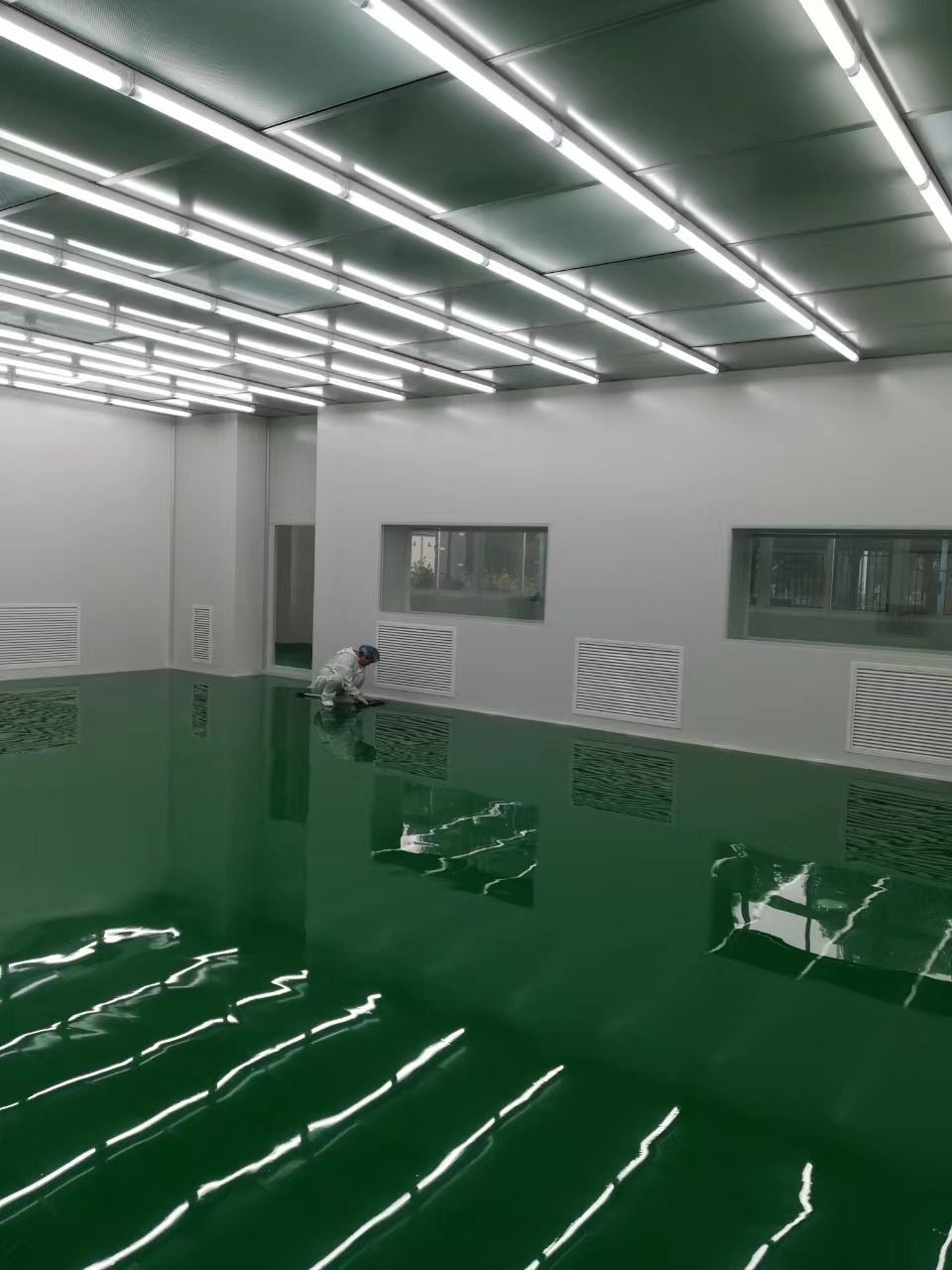
Related Electronics Enclosure Reference
This is an actual semiconductor-equipment project, not an optics or photonics case. Its room-envelope details can support an interface discussion; optical-process suitability and performance require a separate project review.
Review enclosure penetrations, service access and support responsibilities without inferring optical-process performance.
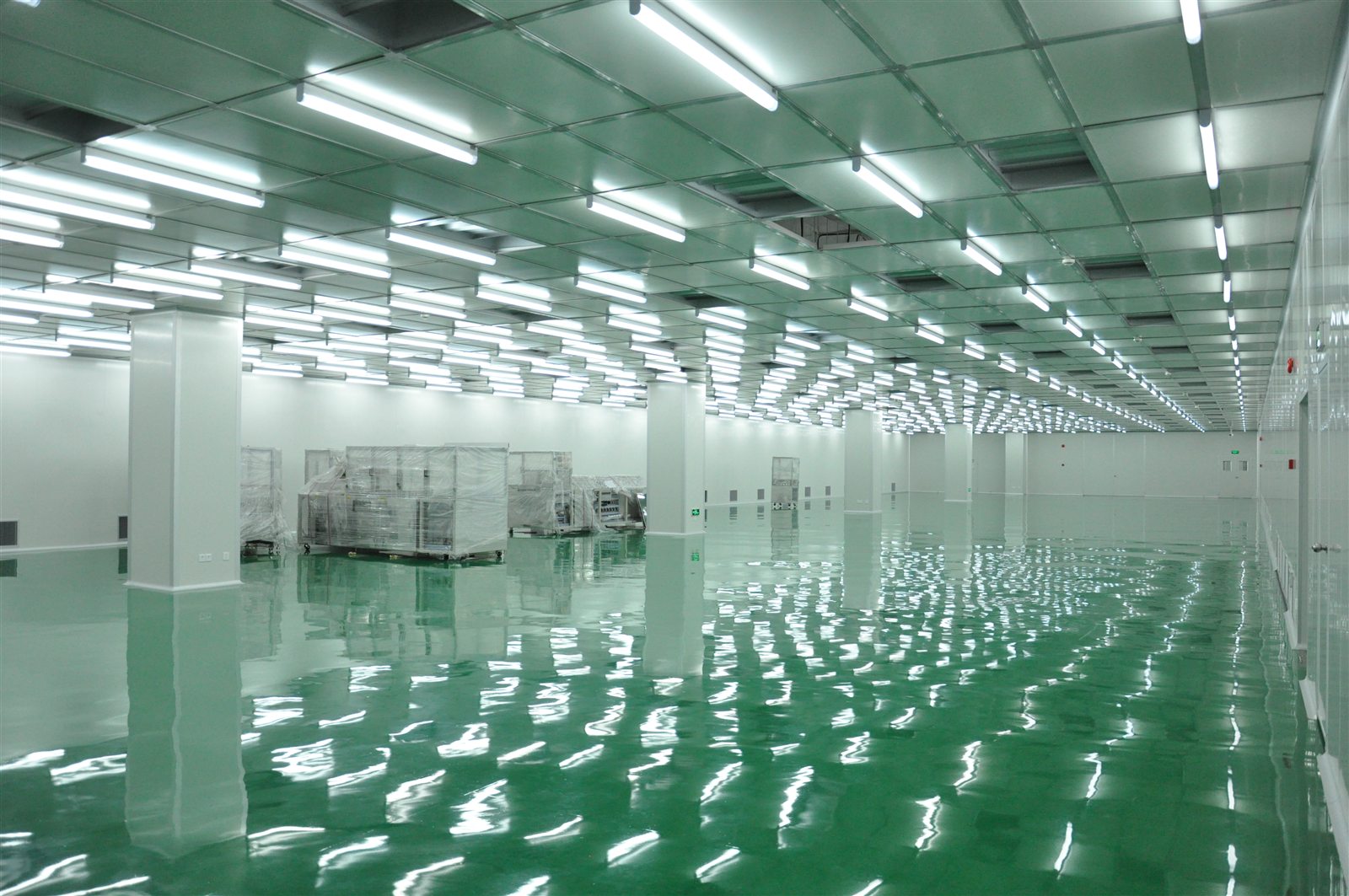
A separate display project illustrates room layout only; it is not an optics customer case.
Product, country and available drawings.
Review the process, rooms and missing inputs.
Agree supply, interfaces and responsibilities.
Review scope, timing and commercial terms.
Let’s Define Your Project
Start with the information you have. Tell us the activity, location and scope you need.
Room plans, process flows and equipment schedules can be sent directly by email.
Before You Start
No. Define requirements from the component, production activity, exposure and verification brief. The optical industry label alone does not determine one universal room class.
No. Airborne particles, surface particles and residues are different considerations. Apply the requirements relevant to the optical system and its handling, cleaning and inspection procedures.
No. Optical benches, structural supports and vibration control require their own approved design. Coordinate these interfaces with the enclosure rather than treating panel selection as vibration performance.
Review process separation, equipment clearances, cleaning and environmental requirements before deciding whether the activities can share a room.
For an optical assembly cleanroom enclosure quotation, send the component, process flow, room and equipment layouts, contamination requirements and location. Add environmental targets, service routes and the requested supply boundary. The quotation checklist helps define the enclosure and its interfaces.