Chemistry & Process Brief
Identify moisture-sensitive stages, material exposure limits, production rate and equipment requirements. Let the process owner define the dew point and cleanliness criteria for each zone.
Industry Solutions / Battery & New Energy
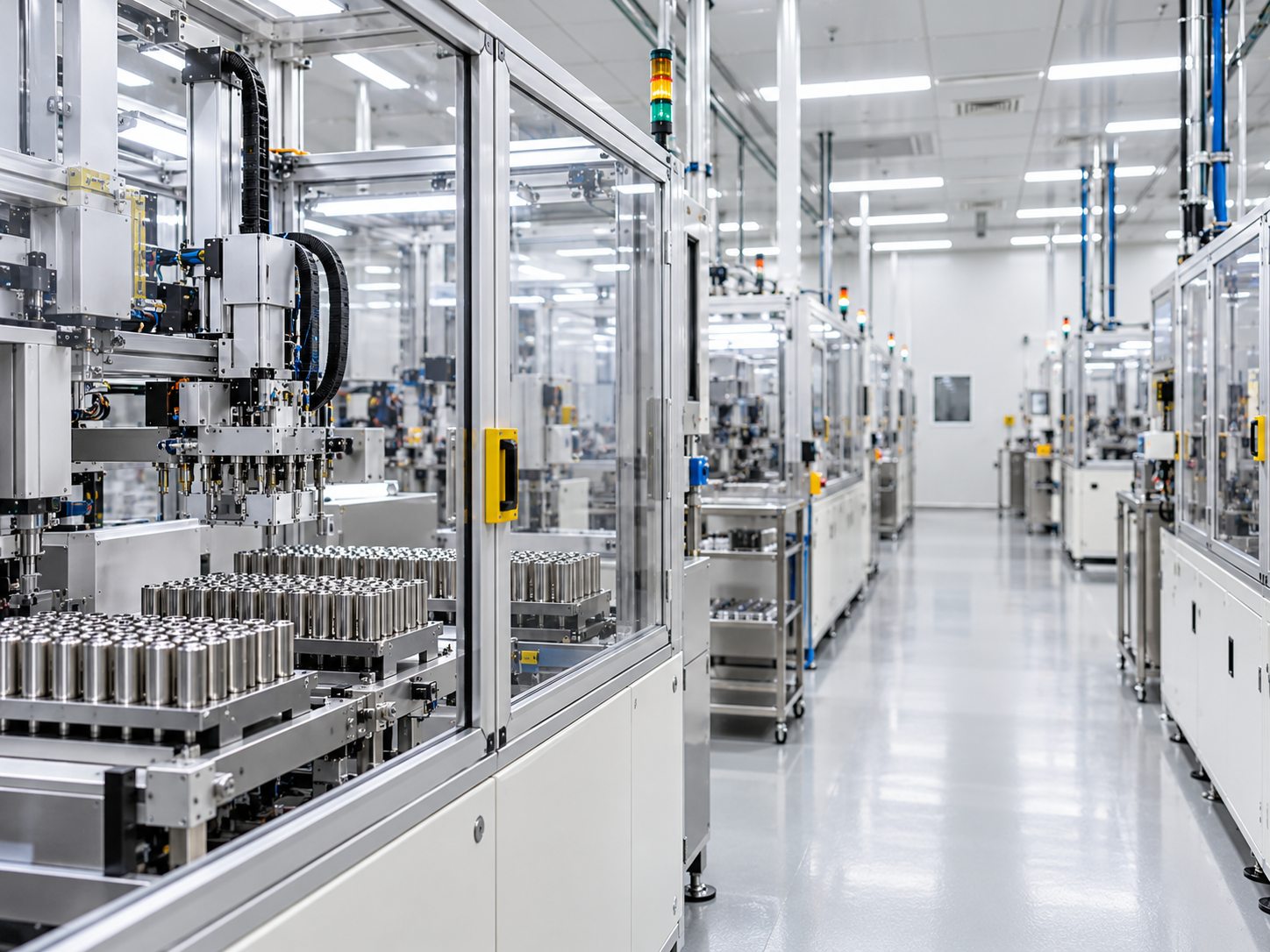
Start with the cell chemistry and the stages where material is exposed. Specify the dew point, particle limits and operating conditions for each stage. Plan the cleanroom and dry room together. Include moisture loads, dry-air conditioning, the enclosure, access, transfers, equipment connections and monitoring. Agree who delivers each part before you request a construction quote.
Battery & Dry Room / Engineering Procurement
Specify moisture and particle limits separately. Mark which areas need a full dry room and where a local mini-environment will suffice.
Identify moisture-sensitive stages, material exposure limits, production rate and equipment requirements. Let the process owner define the dew point and cleanliness criteria for each zone.
Coordinate wall, ceiling and floor junctions, doors, service openings and material routes. Review airlocks and operating practices against the expected moisture ingress.
Develop the dehumidification and air-conditioning scope from the outdoor design conditions, people, process and material loads. Compare whole-room and local dry-zone options before fixing equipment capacity.
Map equipment footprints, extraction, heat rejection, electrical connections and service access. Assign process hazard controls and specialist equipment responsibilities explicitly.
Specify dew-point and temperature measurement points, instrument ranges, alarms and recording needs. Distinguish supply-air measurements from conditions at the process work zone.
Agree enclosure checks, instrument verification, operating-load tests and recovery scenarios. Record the test conditions and acceptance limits rather than treating an unloaded reading as full production performance.
Confirm the approved process requirements, equipment data, installation responsibilities and acceptance records in the project proposal.
Engineering scope in motion
Explore the engineering interfaces before defining the construction and installation package.
Swipe the engineering drawing horizontally to review all four stages.
Include the site's design moisture condition in the conditioning brief.
Conceptual coordination diagram, not measured performance. Conceptual engineering coordination; not measured performance. Final system configuration and acceptance criteria depend on the agreed project brief.
Related Enclosure Reference
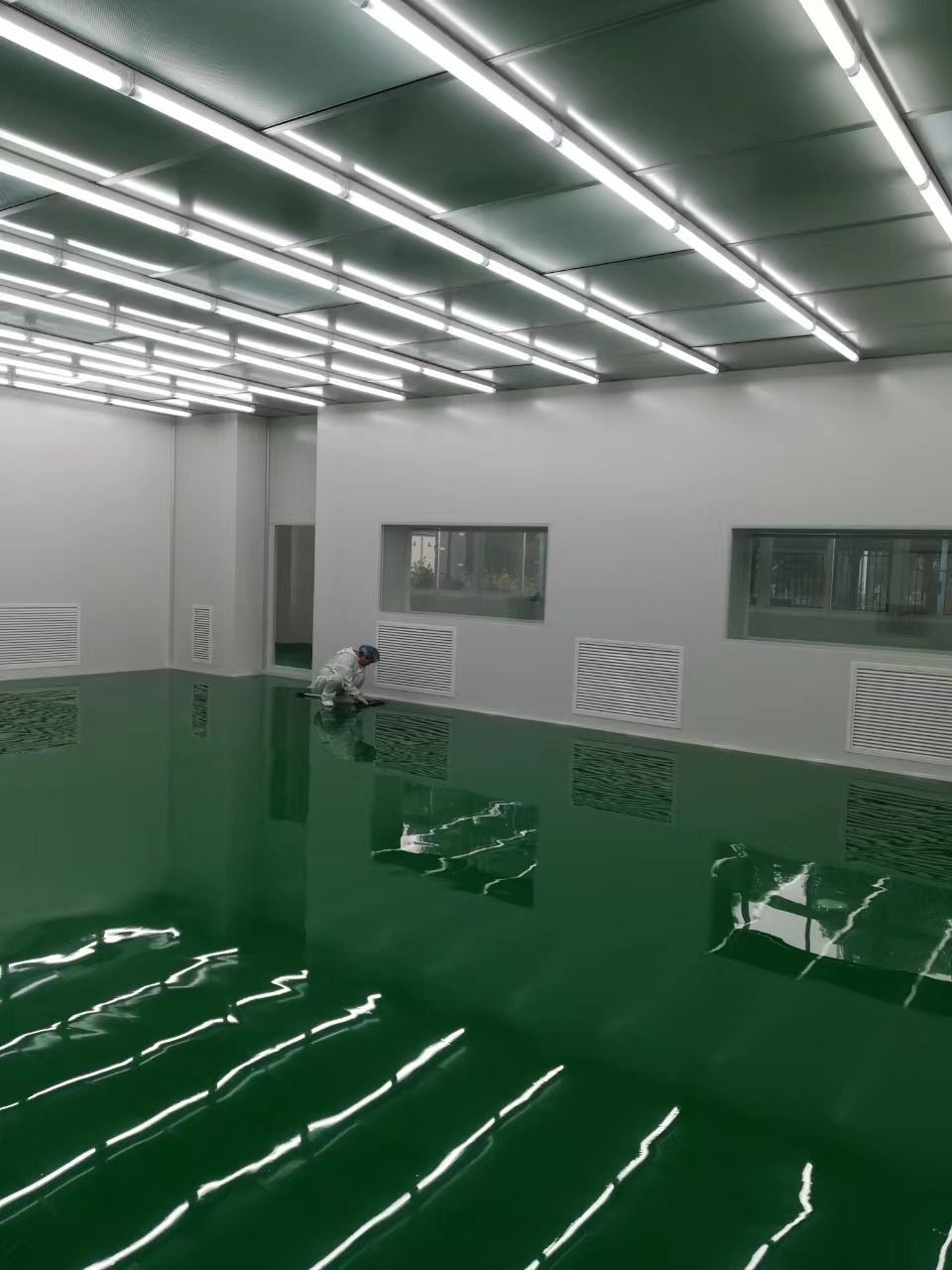
This is a semiconductor-equipment project, not a battery, photovoltaic or dry-room case. Use it to discuss enclosure interfaces; request a process-matched reference and the required performance evidence for your energy project.
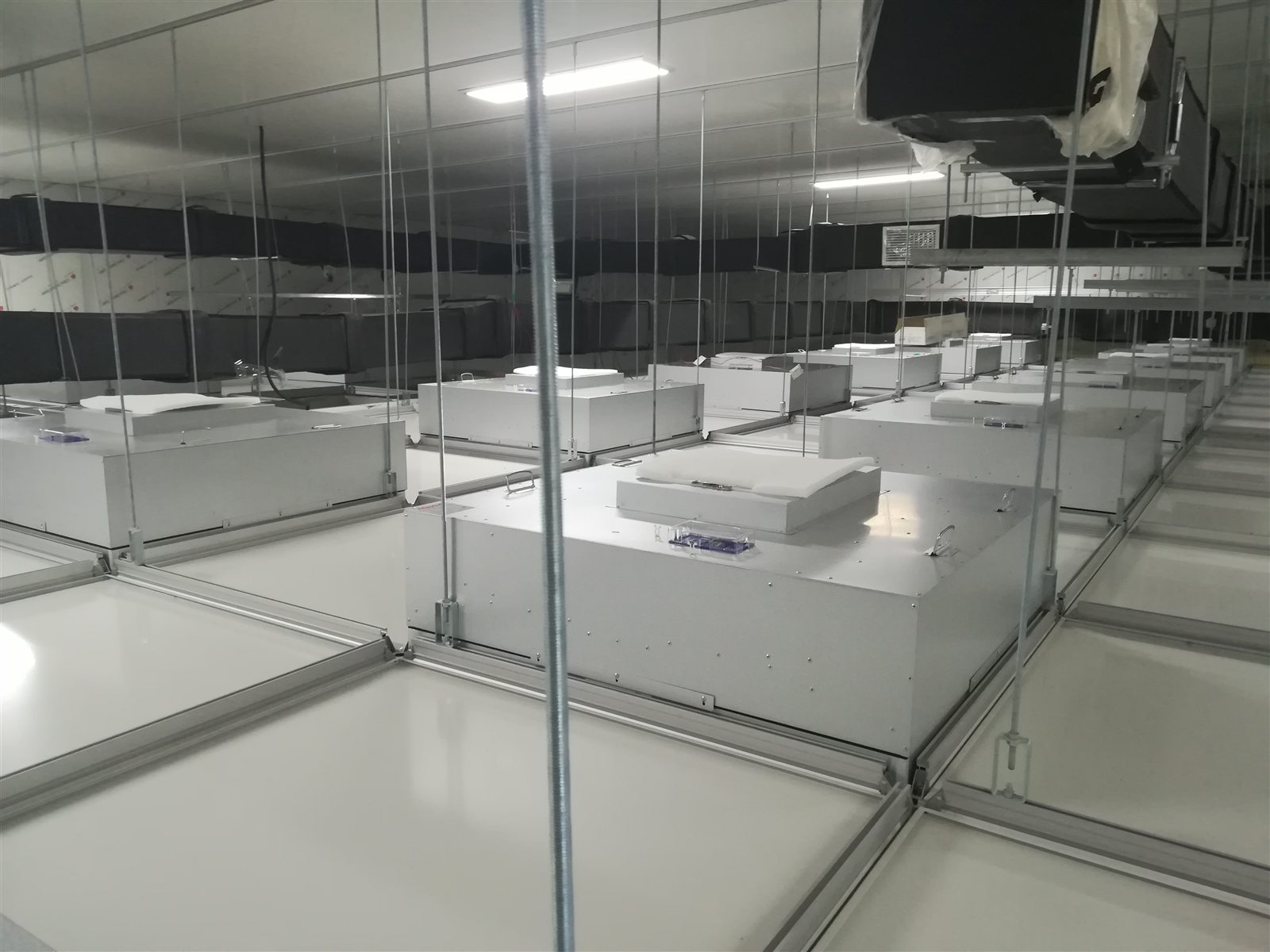
A related construction interface, not evidence of battery, photovoltaic or dry-room performance.
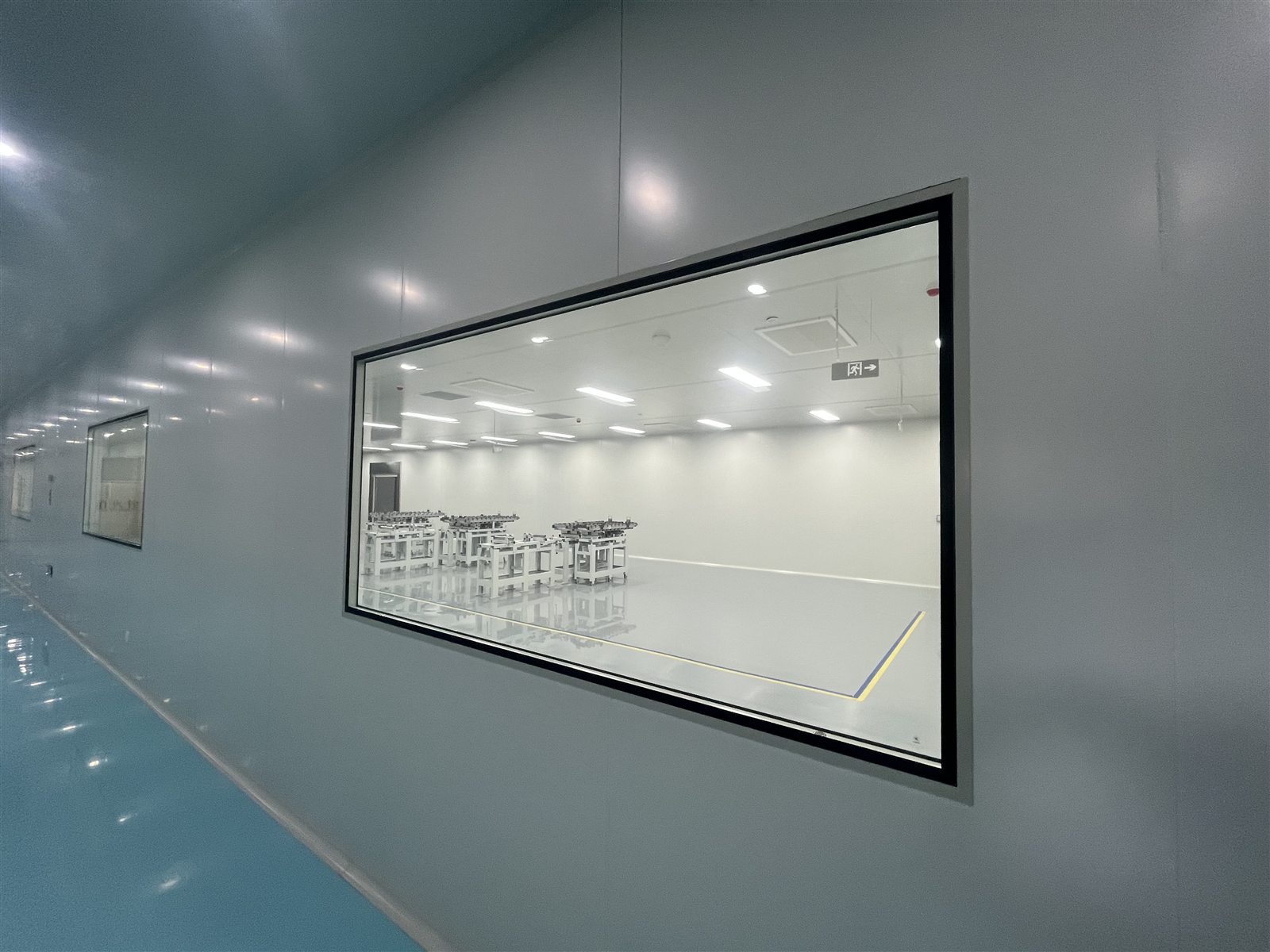
Confirm access, operating conditions and the verification scope before a proposal.
4 Application Areas
Identify the manufacturing process first. Battery assembly and photovoltaic production do not share one universal cleanliness or dry-room specification.
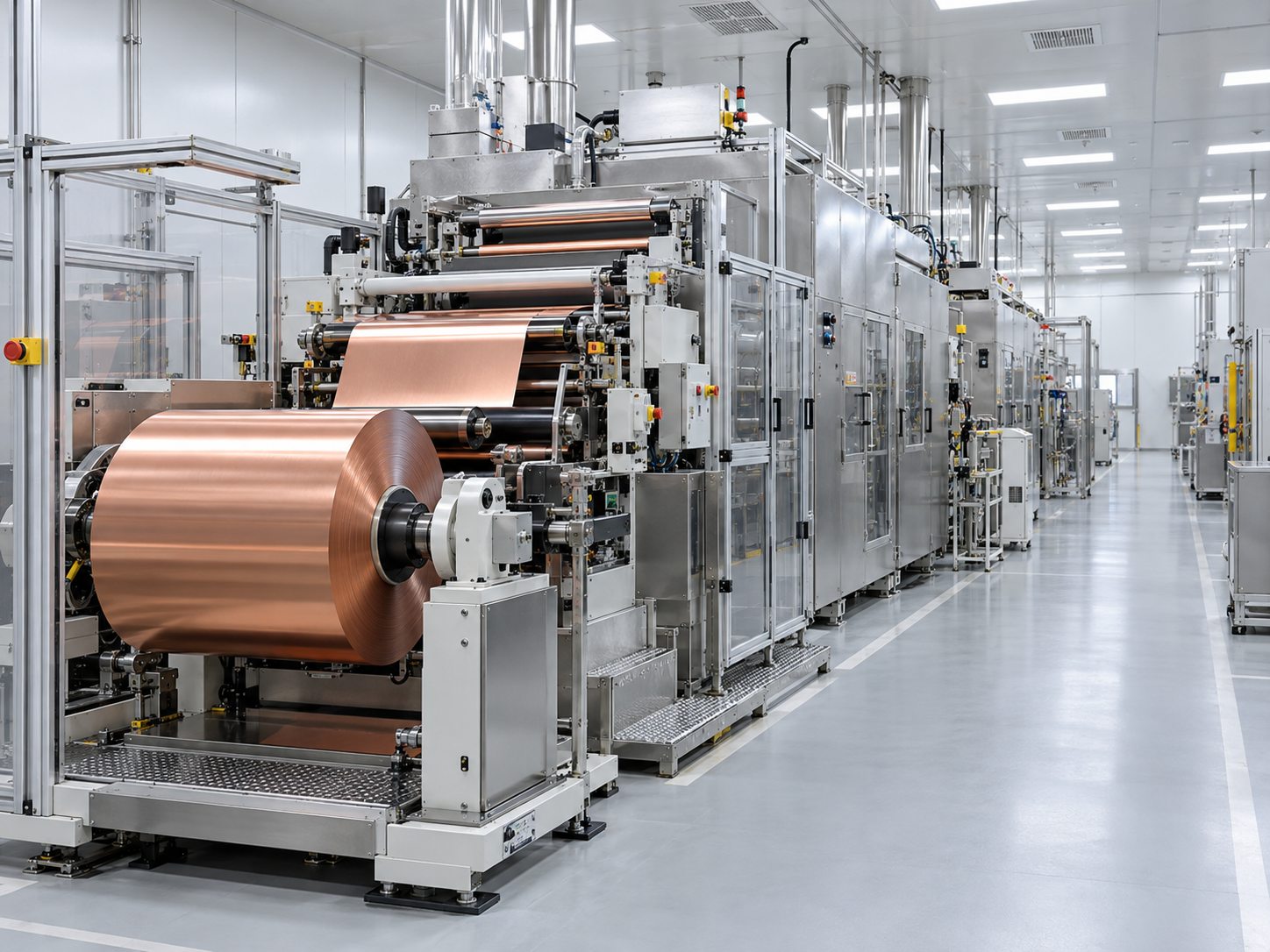
Coordinate coating, web handling and process access with the required ventilation and room conditions.
Discuss This Application ↗Review room access, penetrations and enclosure continuity for the specified assembly environment.
Discuss This Application ↗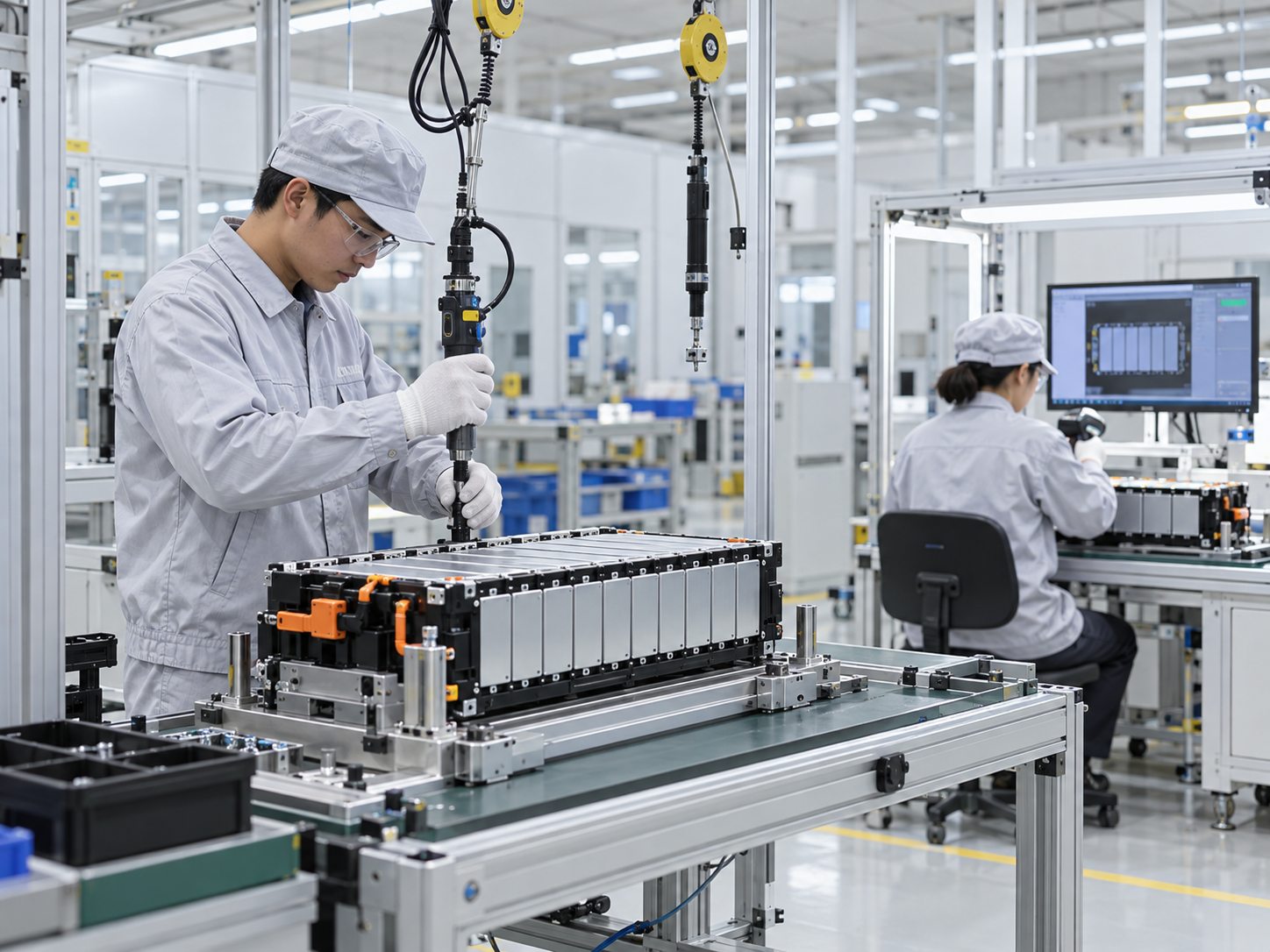
Plan work areas, material handling and inspection interfaces for the module-production process.
Discuss This Application ↗
Coordinate material handling, process-tool access and controlled room conditions for the specified solar-cell or thin-film manufacturing step.
Discuss This Application ↗List particle and moisture targets separately for each room. Responsible designers confirm the room system and verification; a panel alone does not establish a dry-room dew point.
| Information | Why it matters | Who confirms |
|---|---|---|
| Process and room function | Distinguishes battery processing, assembly and photovoltaic production | Process team |
| Particle and moisture targets | Sets separate environmental requirements by room | Process and environmental designers |
| Equipment routes and openings | Coordinates doors and service penetrations | Project and equipment teams |
| Access and verification | Coordinates interfaces and project scope | Designers and client |
Review door and panel interfaces | Prepare an enclosure quotation | Compare panel constructions
TECHNICAL PLANNING / REQUIREMENTS TO EVIDENCE
Start with the exposed material and production step. Coordinate the room boundary, local equipment environment and acceptance methods before releasing wall, ceiling or opening schedules.
For battery manufacturing, define particle cleanliness and moisture targets separately before choosing a cleanroom or dry-room enclosure. Record the cell chemistry, open exposure, process step and equipment requirements.
State any dew-point target and ISO particle class as separate project criteria.
Identify the operations where moisture can affect exposed materials. Ask the process owner for the required dew point, temperature, measurement location, allowable excursions and operating state. A local booth or glovebox may have different conditions from its surrounding room.
Review handling, inspection, thermal loads, ESD and equipment access for the actual sealed assembly. Do not automatically carry an open-cell dry-room requirement into every module, pack or test area.
What brings moisture into the room? Record how many people work there, how often materials move in and out, and how much moisture the process releases. Include outside air, leaks and moisture left from construction. The drying specialist uses these loads to check supply air and recovery time.
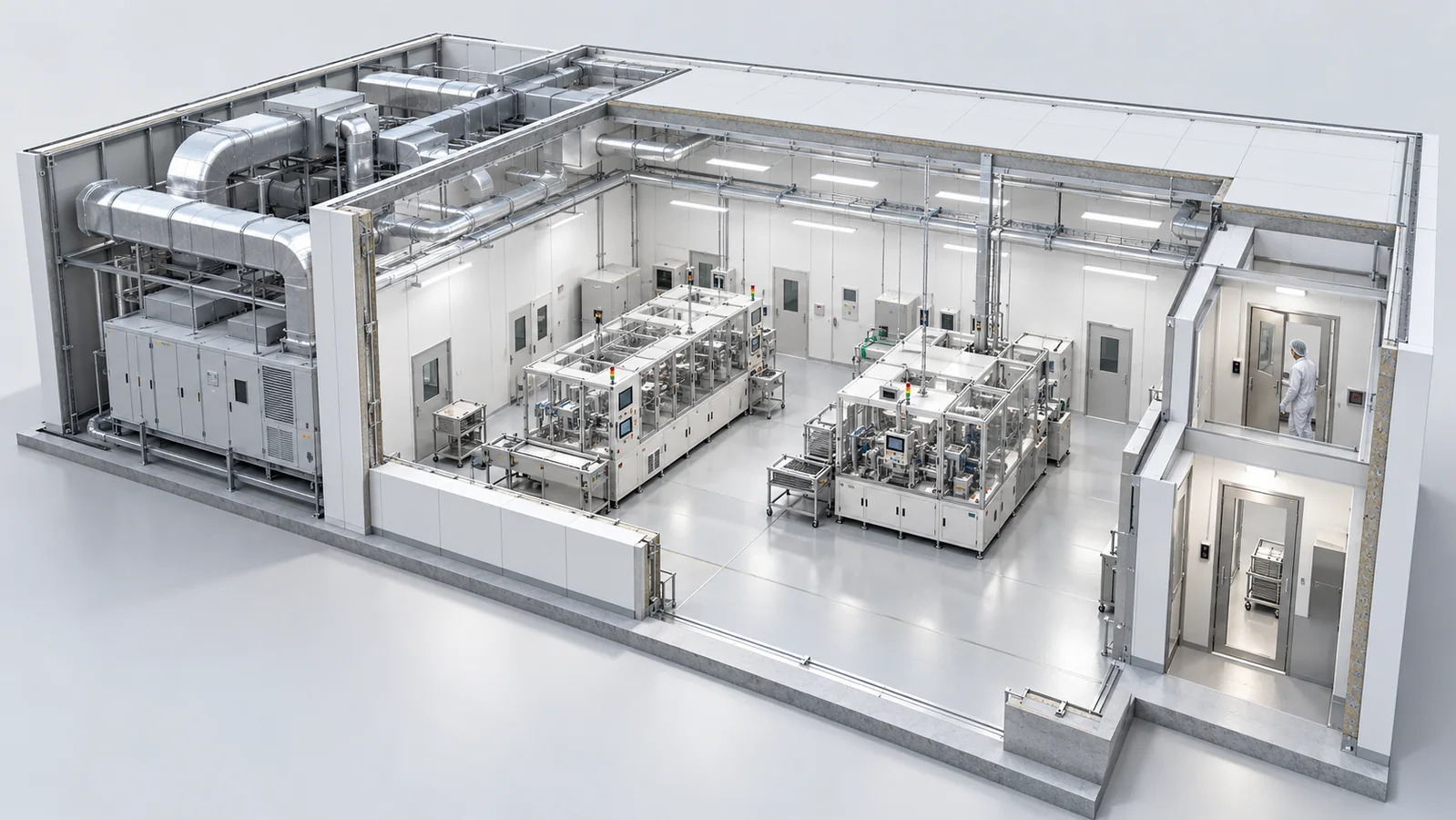
Review room-wide and local control separately. Fraunhofer ISE studies clean/dry rooms and mini-environments across battery production; Vaisala describes measurement at dryers and critical process locations. Neither establishes one dewpoint target for all cell technologies.
A dry room still needs an ESD programme. Ask the responsible specialist to select grounding, personnel controls, handling materials and ionisation for the device and operating conditions. Check the complete finish and material assembly under those conditions.
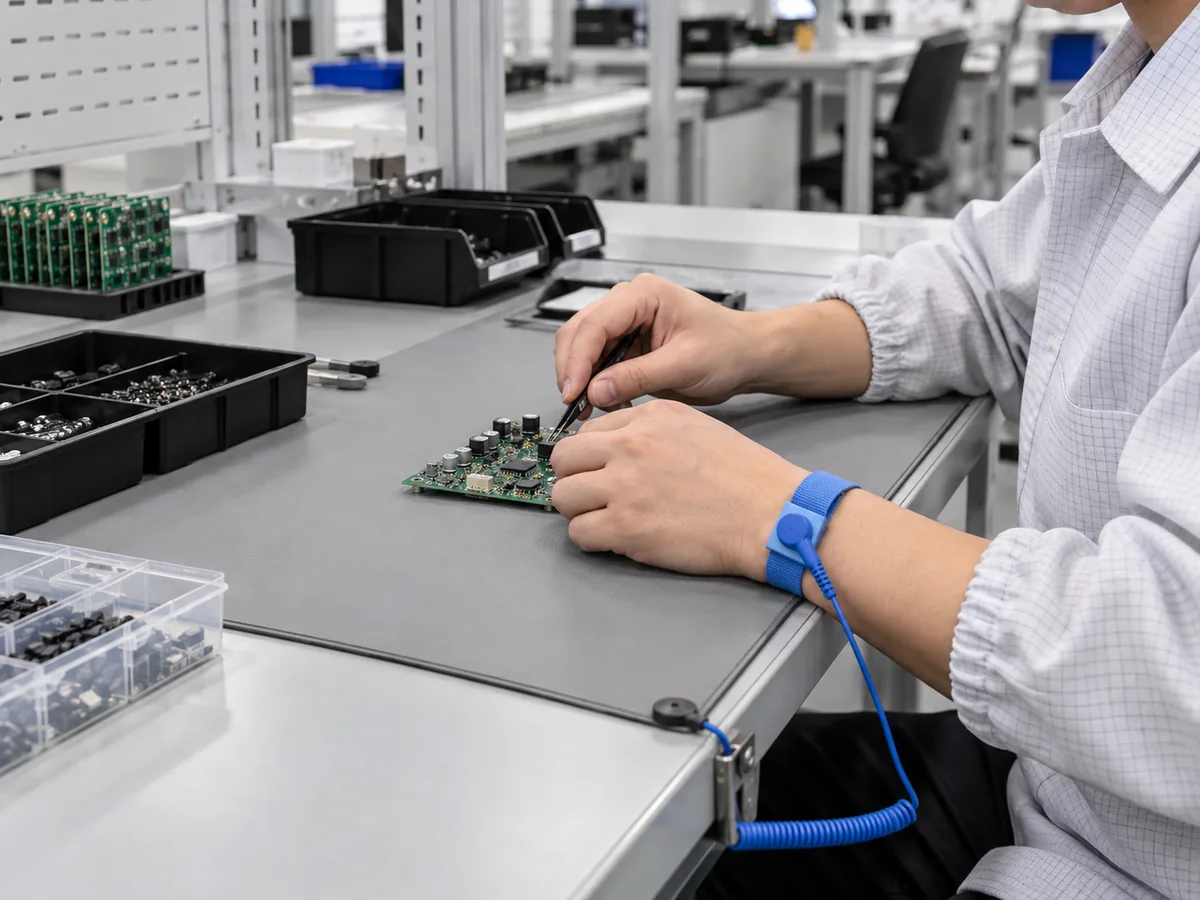
The EOS/ESD Association treats the EPA, grounding, ionisation and protected handling as programme elements. The enclosure specification should identify its interfaces with that programme, including floors, doors, profiles and service penetrations.
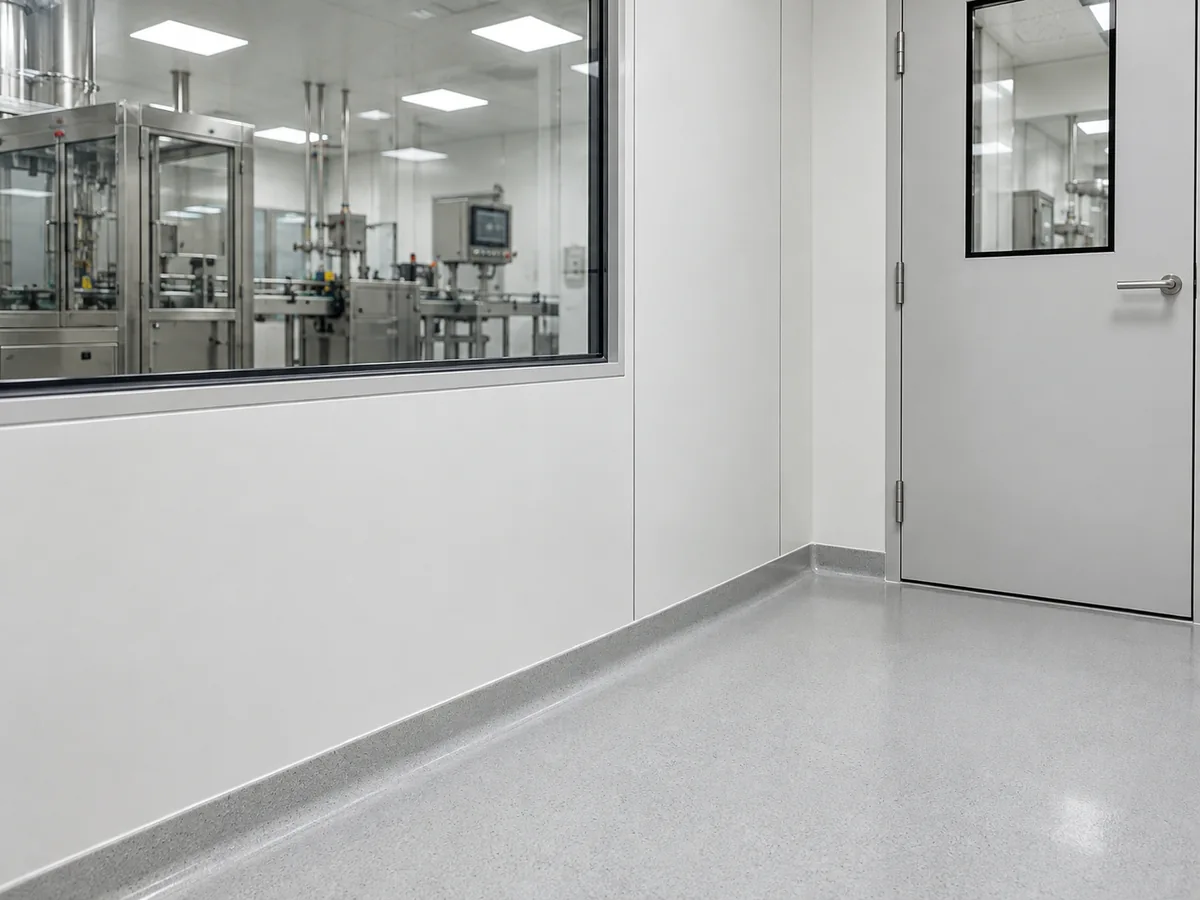
| Interface | Information to Fix | Evidence to Retain |
|---|---|---|
| Wall / ceiling joints | Actual assembly, seals and continuity requirements | Approved detail and installation inspection. |
| Doors / material transfer | Opening sizes, use frequency and access sequence | Door schedule and agreed operation assumptions. |
| Process services | Penetrations, supports and maintenance isolation | Coordinated drawings and trade responsibilities. |
| Specialist safety systems | Chemistry, exhaust, fire and electrical requirements | Authorised design review and applicable evidence. |
Specify how each gas-tightness, fire, chemical or electrostatic requirement will be tested. Match each product report to the proposed build. Assign hazardous exhaust, inert gas, electrical protection and fire safety to the relevant specialists. Each system needs its own performance evidence.
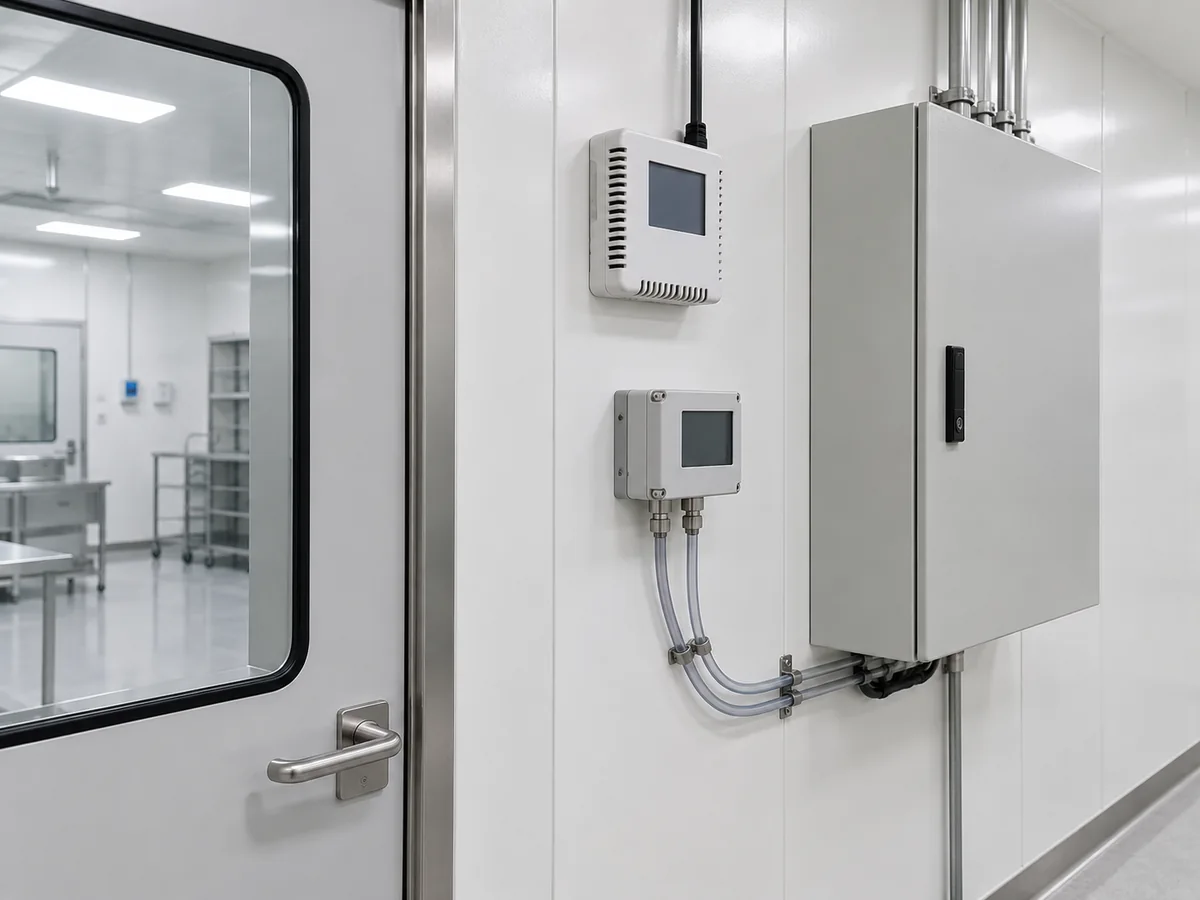
State where the moisture target applies: dryer outlet, room, process inlet or local enclosure. Specify the instrument, range, calibration, response and operating pressure where relevant.
For open-cell work, use a representative measurement location. The supply-duct reading may differ. Record the temperature with each relative-humidity value.
Particle sampling is separate. If an ISO class is specified, record particle sizes, locations and test state. Retain airflow, moisture and process requirements as separate lines on the room data sheet.

Before manufacturing, agree who will inspect the build, check the seals and verify room conditions. Keep the as-built drawings and product records.
List normal occupancy and transfer activity, moisture targets and allowable excursions, sensor positions, alarm/review requirements and agreed recovery checks. Particle-class tests and ESD verification need their own methods. Acceptance conditions should reflect the agreed operating scenario.
Use a separate process branch: exposed cell or deposited layer, tool environment, material handling, heat and extract loads. Photovoltaic work should not inherit battery dryness merely because it shares a New Energy page. Ask the line supplier for its environmental requirements.
Send process and equipment layouts, room heights, target conditions, door and transfer schedules, penetration routes and the supply/installation boundary. Connect these to the project quotation checklist and installation interfaces.
Technical references: ORNL Battery Manufacturing FacilityFraunhofer clean/dry rooms and mini-environmentsVaisala battery dewpoint measurementEOS/ESD programme and materialsISO14644-1 scope
Reviewed 30 October 2026. Apply the requirements adopted for the actual product, facility and market.
Workflow Before Specification
Connect the activity, people, materials and services before choosing the enclosure details.
Adapt these topics to the actual workflow and approved project design.
Specify particle limits, temperature and humidity for the process. Give a dew-point target where the process requires one.
Review doors, transfer points and service penetrations against each zone’s environmental and operating requirements.
Allocate ventilation, process exhaust and any required dehumidification to the responsible specialist designers.
Review surfaces, process exposure and applicable safety requirements without assuming one panel specification suits every energy-manufacturing task.
Cleanliness and moisture requirements depend on the chemistry, material and production step. Photovoltaic production must not be treated as a battery dry room by default. An enclosure supply does not establish a cleanroom class or guarantee a dew point; the complete engineered system and operating conditions require their own verification.
Professional Design References
Select the applicable standards, edition and project criteria with the responsible design team. These sources inform engineering decisions; they are not AILV certifications or project test results.
Process/infrastructure integration, dry rooms versus mini-environments, infiltration, air exchange and monitoring are active research subjects.
Fraunhofer's facilities, test conditions and research services do not describe AILV's facilities or achieved performance.Moisture-sensitive processes, dew-point measurement and differences between room and local-enclosure requirements.
A manufacturer technical article, not a regulation. Its example dew points are not guaranteed AILV specifications; no numerical setpoint is copied into this proposed page.Original process modelling connects dry-room airflow and conditioning/regeneration choices with energy use.
Model-specific assumptions and results; no study energy figure or production size is adopted as an AILV result. Direct publisher body access was unavailable in this check.Enclosure & Engineering Interfaces
Materials, interfaces and responsibilities are confirmed for the project.
Coordinate the construction package with the wider engineering scope, equipment interfaces and installation responsibilities agreed for the project.
Battery-production tools, photovoltaic deposition or processing equipment, dry-air systems and process-safety systems need their own specifications and explicit scope allocation; they are not included by default in a panel order.
Inclusion, performance and responsibilities must be stated in the project proposal.
Coordinate panel format, facing, core, finish, openings and supports with the room layout. Review the custom panel request guide when preparing dimensions and interface details.
Explore Panels ↗Plan access, visibility, frames and sealing details around people, materials and equipment.
View the Common System ↗Resolve corners, floor connections and service penetrations with the responsible designers.
Explore Project Planning ↗Cleanliness and moisture requirements depend on the chemistry, material and production step. Photovoltaic production must not be treated as a battery dry room by default. An enclosure supply does not establish a cleanroom class or guarantee a dew point; the complete engineered system and operating conditions require their own verification.
Product, country and available drawings.
Review the process, rooms and missing inputs.
Agree supply, interfaces and responsibilities.
Review scope, timing and commercial terms.
Let’s Define Your Project
For battery dry room contractor selection, compare the agreed design, construction, HVAC, utility interfaces, installation and verification scope. Send the project inputs below for a coordinated proposal.
Price a modular battery dry room for a pilot line in four parts. Separate the enclosure and airlocks, dehumidifier and air-system package, on-site installation and tie-ins, and dew-point verification. Send the occupied moisture loads, access cycles and site utilities. Ask bidders to name the drying-equipment supplier and the party who demonstrates the specified dew point under the agreed test conditions. For an existing installation, check whether the dehumidifier can serve the expanded dry room.
Room plans, process flows and equipment schedules can be sent directly by email.
Engineering Procurement
Use the requirement provided by the cell-process and equipment teams for the selected chemistry and exposure stage. Confirm where it applies, under which operating load and how it will be measured; a published example for another process is not a universal setpoint.
A dry-room quotation must account for moisture loads and the agreed dew-point condition as well as construction and air systems. Particle cleanliness is a separate requirement, so list both sets of acceptance criteria when both are needed.
Not automatically. Compare process stages, exposure time, access and material flow to determine whether a whole room, a local booth or a mini-environment is appropriate; the decision should be documented with the process owner before procurement.
Agree the measurement locations, instrument checks, occupancy, door and transfer cycles, equipment operation and recovery scenarios in advance. Record the conditions with the results so that a supply-air reading or an unloaded-room reading is not mistaken for demonstrated performance throughout production.
Choose each optional purpose separately. Both start off unless you previously allowed that purpose. Your inquiry works either way.
Your name, email, phone number, message and drawings are not sent by these measurement tags. Privacy Policy