
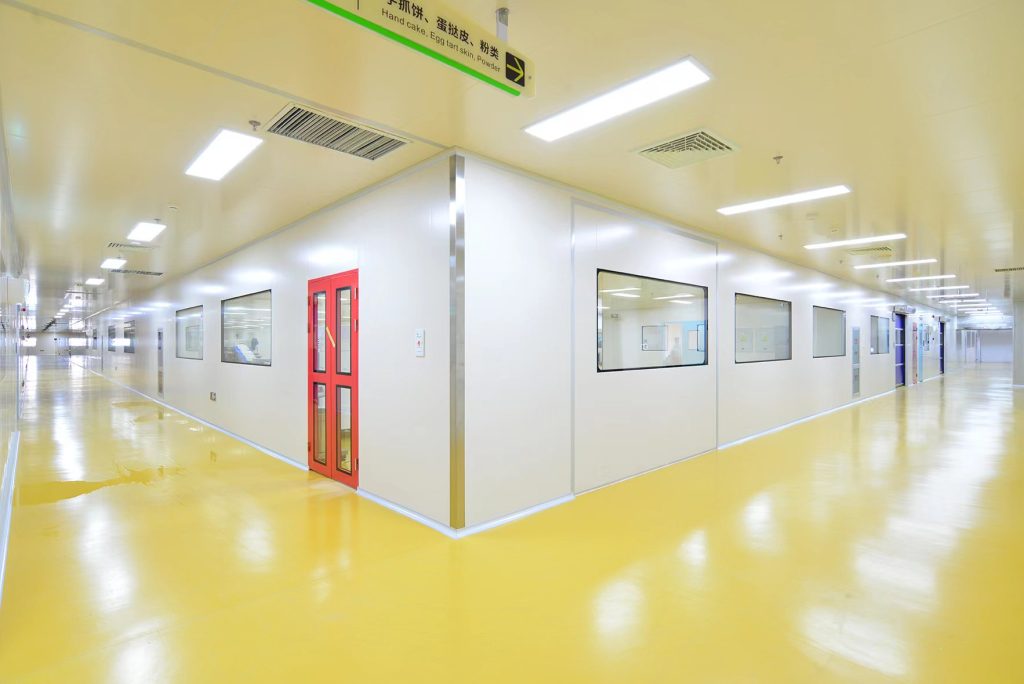
Prioritize areas where exposed food could be contaminated, especially where no later process step will address that contamination. Define separation, access, cleaning, drainage and air control around the actual product and process. A controlled production area does not automatically need an ISO-classified cleanroom.
Start With the Process, Not a Room Class
Map the product from receiving to dispatch. Mark when it is exposed, what contamination matters, which controls follow, and where people, equipment, packaging or waste cross its route. Codex recommends separating areas with different hygiene controls using suitable barriers, location, traffic, airflow or scheduling measures. [1]
| Area | What to Review |
|---|---|
| Receiving & Raw Preparation | Separate incoming materials, waste and dirty equipment from exposed finished products; plan washing and drainage where needed. |
| After a Defined Treatment Step | Review cooling, slicing, filling and packing routes for possible recontamination before the product is enclosed. |
| Fresh-Cut or Other Exposed Ready-to-Eat Production | Identify hazards that later processing will not remove; define hygiene boundaries and verification with the food-safety team. |
| Dry Ingredients & Powder Handling | Evaluate dust, moisture, allergens and movement between rooms; avoid copying a wet-processing control plan. |
These are planning prompts, not fixed hygiene-zone assignments. Each boundary needs to follow the facility’s hazard assessment and operating procedures.
What Does Research Tell Us?
Bakery cooling deserves a process-specific review. Zand and colleagues combined eight months of airborne microbial monitoring in a bakery with airflow modelling to investigate contamination routes toward a cooling zone and develop localized protection. This supports reviewing the exposure path; it does not establish a universal room specification or an AILV performance result. [2]
Wet areas and traffic deserve attention too. Simonetti and colleagues followed three commercial tree-fruit packinghouses over two years. Their findings linked contamination patterns with production activity, moisture accumulation and uncontrolled personnel or equipment traffic. These produce-facility observations support site-specific drainage, movement and monitoring reviews—not identical controls for every food category. [3]
Translate the Assessment Into Room Details
- Agree the product, process flow, exposed stages and cleaning method.
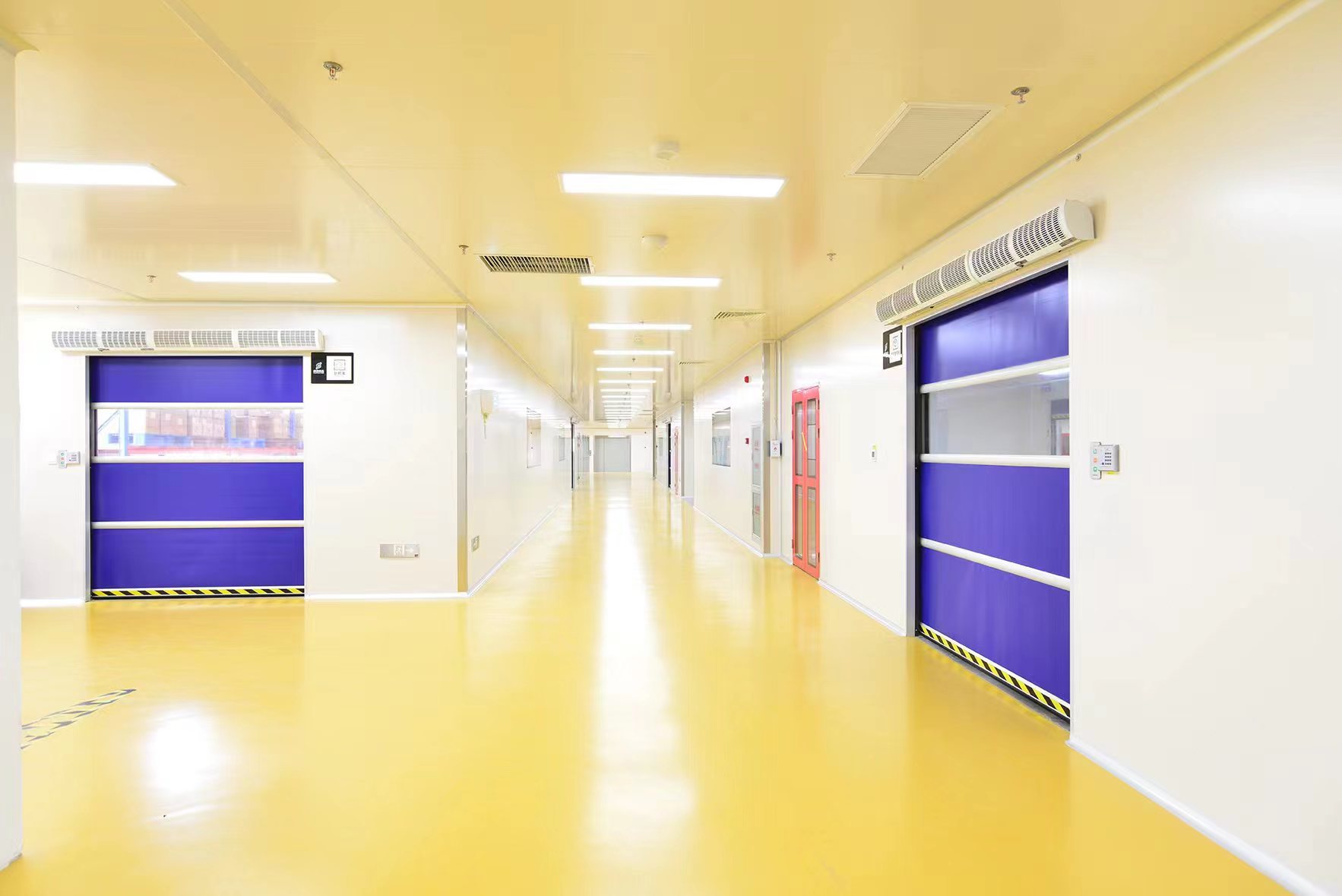
- Coordinate cleanable wall and ceiling surfaces, doors, observation windows and service openings.
- Resolve floor connections, drainage, condensation risks and maintenance access with the responsible specialists.
- Define ventilation, filtration, temperature and humidity targets where justified, and record how they will be checked.
AILV can review the enclosure against these inputs. Explore Food & Beverage Cleanroom Solutions and the information needed for an enclosure quotation.
Food Production Questions
Does an ISO particle class prove food safety?
No. ISO 14644-1 classifies airborne particle concentration; it does not characterize whether those particles are viable. Food-safety controls and their verification require a separate product- and process-specific basis. [4]
Can an existing workshop be upgraded?
Assess the current layout, routes, cleaning, services and building interfaces first. Targeted separation or local protection may be worth evaluating before assuming the entire facility needs rebuilding.
What should I send to start a discussion?
Send the food category, process flow, project country, room plan, exposed-product stages, cleaning regime and proposed supply scope. Identify unresolved requirements for the food-safety team and local specialists to confirm.
Research & Reference Basis
- Codex Alimentarius Commission (2022 revision). General Principles of Food Hygiene, CXC 1-1969, section 9.1.2. General hygiene guidance; applicable local requirements must also be checked.
- Zand E. et al. (2022). Identification of microbial airborne contamination routes in a food production environment and development of a tailored protection concept using computational fluid dynamics (CFD) simulation. Journal of Food Engineering 334:111157. Facility monitoring and modelling, not a test of AILV products.
- Simonetti T. et al. (2021). Prevalence and Distribution of Listeria monocytogenes in Three Commercial Tree Fruit Packinghouses. Frontiers in Microbiology 12:652708. Observations from three facilities, not universal food-factory design criteria.
- ISO/TC 209 (2015). ISO 14644-1: classification by airborne particle concentration. Public scope summary consulted; not a microbiological safety standard.
Discuss Your Food Production Project with AILV. Final controls, responsibilities and acceptance criteria should be agreed for the actual facility.