
Battery Dry Room Expansion and Dehumidifier Reuse
Check operating dew point, moisture load, airflow and enclosure interfaces before retaining a dehumidifier. Define how the expanded battery dry room will be accepted.
Verify the existing dehumidifier under representative operating conditions before specifying it for the expanded battery dry room. Compare its available drying capacity with the combined moisture load. Then check whether the air distribution, enclosure and controls can serve both areas and meet the agreed recovery criteria after a transfer.
By Albert Fu · Cleanroom Specialist at AILV
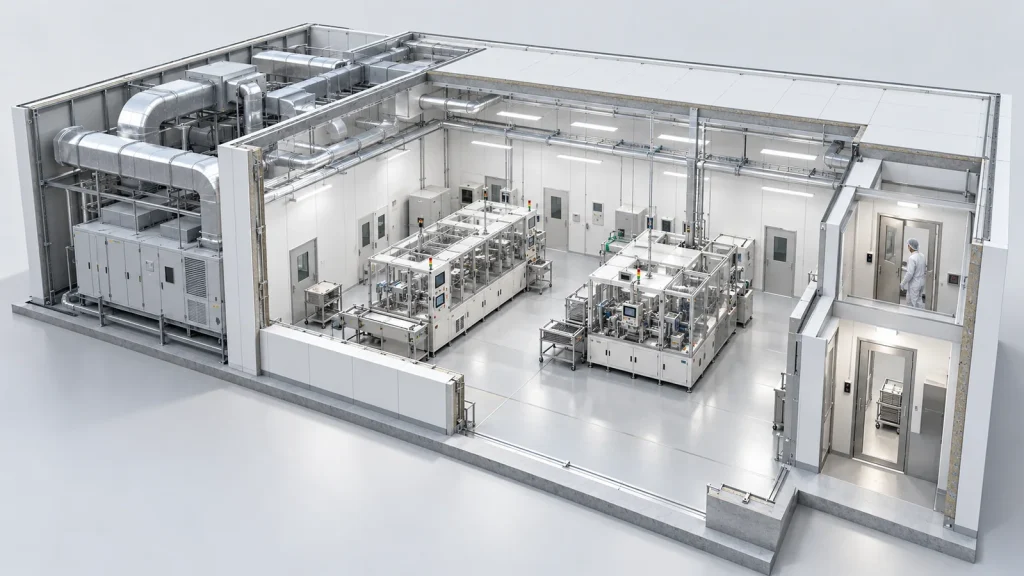
The AILV cutaway illustrates how a dry-room enclosure, airlocks and an external drying unit fit together.
Build an operating baseline for the existing room
Collect trends from a representative shift. Include supply and room dew point, supply and return airflow, outdoor air conditions, door activity and any alarms or excursions. Record which equipment was running and how many people were present. Review the dehumidifier’s service history, controls and available regeneration utilities alongside the trends.
Compare the added load with the capacity available on site
List the existing and added moisture loads by source. Include people, outdoor or make-up air, leakage, transfer cycles and product or process moisture where applicable. Check equipment heat gain and cooling capacity separately. Added floor area alone leaves out the conditions that govern reuse.
Ask the dehumidifier supplier to state the capacity available at the project’s design inlet conditions and required supply dew point, using the utilities available on site. Ask the HVAC contractor to show where the supply and return air will go and to check the fan and duct capacity at the new duty. Have bidders identify the assumptions behind any claimed margin.
Define the tie-in and acceptance tests in the RFQ
Mark the junction from the old enclosure to the new one. Include airlocks, door seals, floor and ceiling junctions, and service penetrations. Have bidders identify where the existing envelope will stay in service, where new sealing is required, and when the connection can be made without disrupting the operating area outside the agreed shutdown window.
Specify the test conditions for steady operation and for recovery after a representative door or transfer event. State the occupied equipment and staffing conditions, measuring points, acceptance band and permitted recovery time. Assign who supplies calibrated instruments, trends the results and signs off each room. If testing cannot reproduce the agreed load, document the difference and agree how full-load acceptance will be completed.
For the wider scope, review battery dry room engineering and cleanroom retrofit and expansion. Send the room layout, utility data and current dew-point trends when you request an engineering quotation.
Frequently asked questions
Can the retained dehumidifier serve the added rooms?
Retain the unit if its verified capacity at the required inlet and supply conditions covers the combined existing and new loads, with the margin agreed for the project. Check regeneration utilities, available duct pressure and airflow to the expanded zones. Price a separate drying zone or a unit upgrade if the comparison leaves a shortfall.
Where should dew point be measured during acceptance?
Agree the acceptance points with the process and HVAC teams. A supply-duct reading helps assess unit performance. Use room readings at agreed process locations and near relevant transfer interfaces to assess the occupied zone and recovery. Record sensor ranges, calibration status and response times.
How should recovery after a material transfer be tested?
Agree the door sequence, transfer duration, expected people and equipment loads, starting conditions and the time allowed to return to the project’s acceptance band. Trend the relevant room readings through the event and recovery. Ask the facility owner to approve the scenario and release criteria before the test.
Technical references
- Fraunhofer ISE research on clean and dry rooms covers dew-point monitoring, air exchange, infiltration and how dry-room infrastructure interacts with the production process.
- Vaisala’s application note on dew-point measurements discusses measurement response in low-humidity dehumidifier control. Set instrument requirements from the project’s range and response needs.
- ISO 14644-4:2022 public scope covers design, construction and start-up for new, modified and refurbished cleanroom installations. Specify moisture limits separately for the battery process.