Technical guide by Albert Fu · Cleanroom Specialist at AILV
For aseptically filled pharmaceutical vials, coordinate the lyophilization cleanroom around the container’s exposure and closure state from filling through unloading. Agree the transfer and loading arrangement with the equipment supplier, then align the room boundary, air protection, service access and verification responsibilities. A lyophilizer footprint alone is not a sufficient cleanroom design brief.
Map Where the Product Remains Exposed
For sterile medicinal products, EU GMP Annex 1, sections 8.121–8.126, addresses the protection chain around lyophilization. Container closure, operator interventions and transfer equipment must be considered alongside the machine. Identify whether stoppering is complete before the chamber opens and whether subsequent handling still involves exposed product.
FDA’s September 2004 aseptic-processing guidance, section IV.E, also discusses partially closed containers moving from filling to the lyophilizer. Review the applicable market requirements with the manufacturer’s quality and engineering teams; distinguish local critical protection from the surrounding room.
- 01 · Filling exitRecord the container and stopper position at the line boundary.
- 02 · Transfer and loadingDefine the handling system, protective interface and equipment clearances.
- 03 · Lyophilizer processConfirm the vendor’s process arrangement and specified stoppering step.
- 04 · UnloadingRecord the closure state and protection needed during subsequent handling.
Illustrative interface sequence. Confirm the actual process and closure point with the product owner and equipment supplier.
Turn the Equipment Layout Into an Interface Schedule
Use these four boundaries to compare engineering quotations. This is a procurement method for organizing design inputs, rather than a prescribed equipment configuration.
| Boundary | Drawing or information to request | Decision to record |
|---|---|---|
| Filling-to-transfer | Line exit, container condition, barrier termination and the selected transfer arrangement. | Where each supplier’s protective and mechanical scope starts and ends. |
| Transfer-to-chamber | Loading device, cart or conveyor envelope, door movement, operator positions and service clearances. | Room openings, equipment supports, access and the air-protection review boundary. |
| Process-to-service side | Equipment general arrangement, panel/door interfaces, maintenance routes and utility connection drawings. | Who supplies, seals, supports, connects and maintains each interface. |
| Installation-to-acceptance | Inspection points, vendor checks, room tests and the manufacturer’s qualification plan. | Test conditions, witnesses, document issuers and approval responsibilities. |
Include normal operation, loading and maintenance in the layout review. Transport devices and door arrangements can affect the protected zone; reserve the space needed to assess the installed configuration.
Obtain Utility Duties From the Selected Machine
Request the vendor’s actual electrical, cooling, steam, gas, vacuum and drainage requirements, as applicable. Record operating conditions, peak demands, connection locations and the division between upstream services and equipment-side systems. Do not estimate these duties from the room area or assign every utility to every machine.
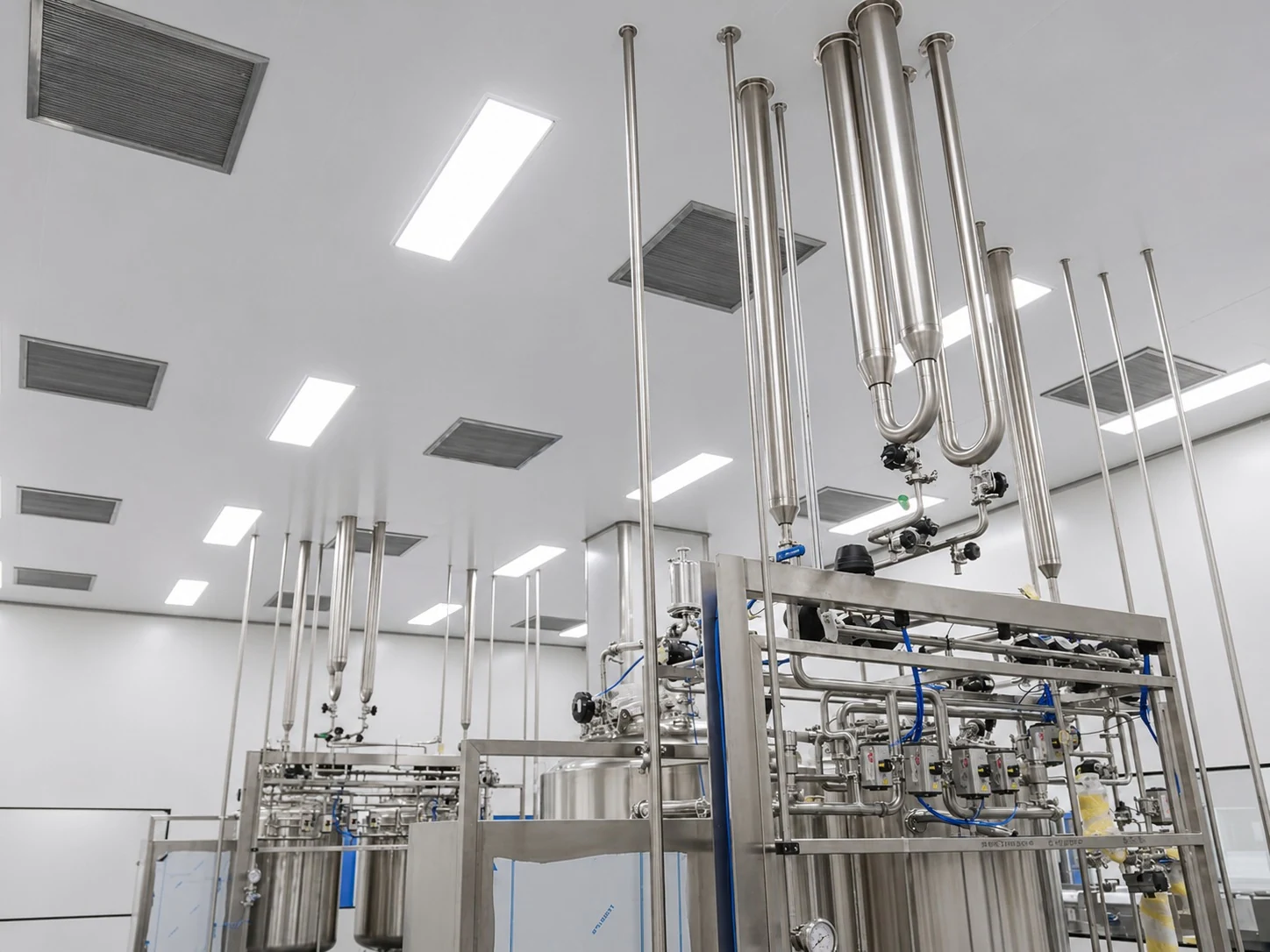
Review the utility-system scope with the equipment data before closing the service schedule. Keep maintenance access and proposed service routes visible on the coordinated drawings.
Assign the Handover Records to the Right Package
Ask for a document matrix that distinguishes room/HVAC installation and testing, equipment qualification, equipment sterilization and integrity work, and product-process validation. Identify the responsible vendor, contractor, manufacturer or appointed specialist for each item. Room test results do not replace the other records.
AILV can review the agreed room construction, HVAC, utility interfaces and installation package within the pharmaceutical engineering scope. Provide the process-flow brief, selected equipment drawings and proposed acceptance responsibilities for an initial review.
Discuss Filling and Lyophilizer Interfaces ↗
Lyophilization Cleanroom Procurement FAQ
Does the whole lyophilizer room need the same classification as the exposed-product zone?
Define the critical protection and background separately for the selected process and equipment arrangement. The protection of partially closed or otherwise exposed containers must continue across the relevant transfer and loading interfaces. A room label alone does not establish that protection.
Does freeze-drying replace equipment sterilization or aseptic-process validation?
No. Freeze-drying is not a substitute for the applicable sterilization and aseptic-process controls. Equipment sterilization, chamber integrity, product-process validation and room-performance testing have different purposes and require their own agreed evidence and responsible parties.
What can be quoted before the lyophilizer supplier is selected?
A preliminary room and service scope can be reviewed from the product-flow brief, building plans and available equipment assumptions. Record the unresolved loading method, equipment envelope, utility duties and access requirements. Review the vendor data and interface drawings before releasing the final construction scope.
Technical Sources and Applicability
- European Commission — EU GMP Annex 1 (2022), sections 8.121–8.126: lyophilization, transfer, loading and unloading in sterile medicinal-product manufacture.
- FDA — Sterile Drug Products Produced by Aseptic Processing, September 2004, section IV.E: facility and transfer protection for aseptically processed products.
Sources reviewed 15 November 2026. Engineering input schedules above are procurement recommendations. Regulatory references do not establish AILV certification, supplied lyophilizers or validated product-process performance.