
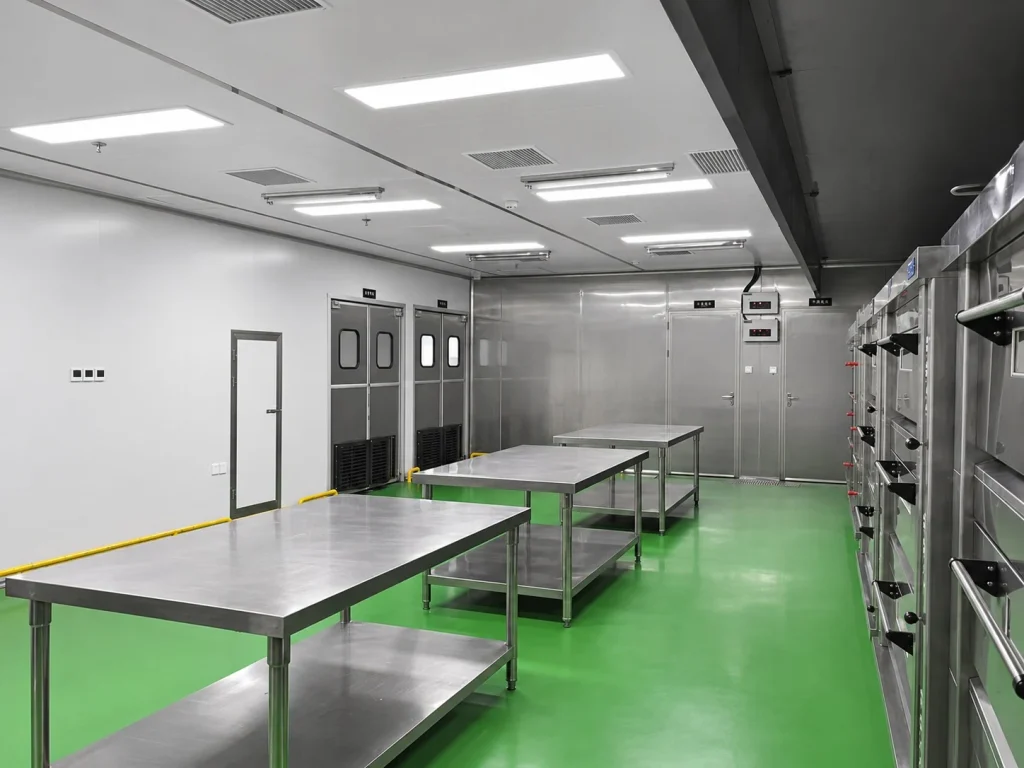
Food Powder Packing Rooms: Dry Cleaning or Washdown?
Compare dry cleaning, controlled wet cleaning and washdown before defining drainage, condensation control and sanitation handover for a low-moisture food powder packing room.
Specify routine dry cleaning where exposed low-moisture food is packed in an area requiring the strictest hygiene controls. If that area occasionally needs controlled wet cleaning, define where water can be used, how it will be collected and how the area will be dried. Assign ordinary washdown to designated non-critical, non-process areas. Agree these boundaries before requesting room quotations. Codex CXC 75-2015, §6.1.2
By Albert Fu · Cleanroom Specialist at AILV
Mark three cleaning modes on the layout
Routine dry cleaning at the exposed packing line
Show where powder is exposed, from filler infeed through pack closure, and identify the surfaces where residue collects. Check access under the filler and around service penetrations, overhead ledges and wall-floor junctions. Provide room to use and store the sanitation team’s dedicated tools.
Controlled wet cleaning where the sanitation plan requires it
Identify the equipment or area involved, the water collection route and how adjacent dry areas will be protected. Codex calls for limiting water, avoiding water aerosols and fully drying affected areas and components. Where practical, move removable parts to a dedicated cleaning room. Ask the filler supplier to identify parts that can be removed and any cavities or assemblies that are difficult to dry.
Washdown in designated support areas
Assign wet cleaning to appropriate support spaces, such as waste or maintenance areas. Review the threshold, staff and trolley routes, ventilation interfaces and the location of the drying area so water and damp equipment do not travel back to the dry packing zone.
Give bidders a drawing and a cleaning schedule
Mark the filler, exposed product path, wash points, thresholds, floor outlets and routes for taking parts away and bringing them back. For each zone, state the approved cleaning method and the surfaces exposed to water or chemicals, including frequency and contact conditions when known.
- Enclosure and floor: ask the bidders to identify who details seals, penetrations, thresholds and any required drain connections.
- Moisture and ventilation: flag cold surfaces, overhead services, adjacent wet rooms and other condensation risks. Ask the HVAC designer to show how each interface will be addressed.
- Handover: agree who inspects the installed details. Have the food business operator define drying and release checks under its sanitation programme.
For a broader layout review, see which food-factory areas need a controlled environment and the food and beverage engineering scope. Share your proposed cleaning zones and equipment layout when you request an engineering quotation.
Frequently asked questions
Does a dry powder packing room need a floor drain?
Start by identifying which operations need water and where it will go. Codex prefers no drains in areas requiring stringent hygiene control. If a drain is needed, review floor slope, backflow protection and how the drain will be sealed during dry processing.
Where should removable filler parts be wet cleaned?
Plan a dedicated wash area outside the stringent hygiene zone where practical. Agree the outgoing route, the drying location and the checks for returning clean, dry parts to the line.
Who decides when the packing line can restart after controlled wet cleaning?
The food business operator sets the release procedure. Agree who checks that affected surfaces and components are fully dry, what environmental verification applies and who records the release.
Source and scope
Codex CXC 75-2015 was adopted in 2015, revised in 2016 and amended in 2018. Sections 2, 4.2–4.4, 5.1 and 6.1 cover scope, facility design, moisture control and cleaning methods. Apply the guidance to the actual low-moisture product and process. Room design criteria come from the project brief and applicable market requirements. FAO/WHO Codex code of practice