
Chemical compatibility depends on the complete exposed surface and the actual cleaning cycle. Compare the coating or metal, joints and seals against the cleaning product, concentration, contact time, temperature and frequency before approving a cleanroom panel specification.

Chemical Compatibility Reference Table
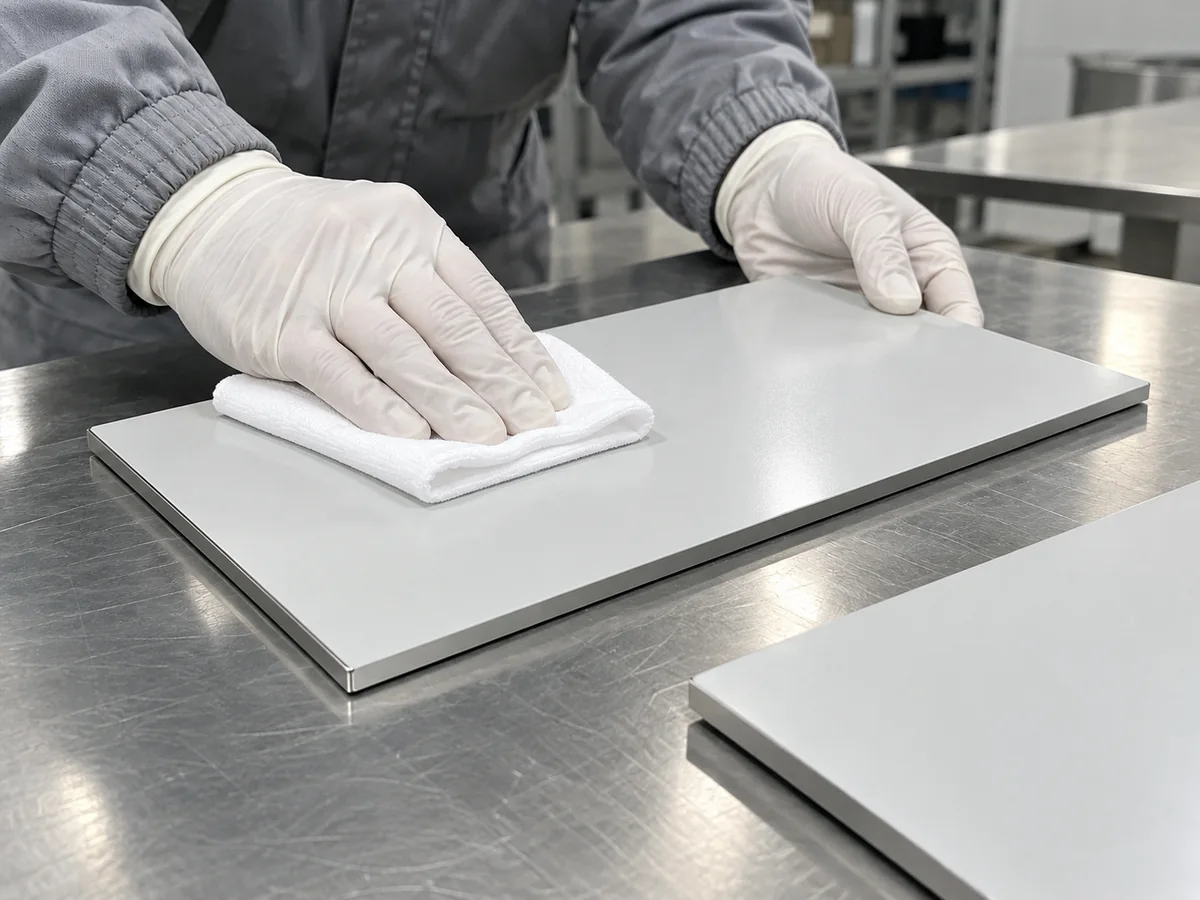
Use the values below to frame questions for the supplier. They are published third-party material references, not test results for AILV panels or a cleaning instruction. A coating, primer, pigment, adhesive and exposed seal may respond differently from a raw resin or bare metal.
On a small screen, scroll the table sideways. Keyboard users can focus the table and use the arrow keys.
| Chemical / exposure | Reference material and condition | Published reference | What to confirm for the panel |
|---|---|---|---|
| Hydrogen peroxide, liquid | Arkema Kynar® PVDF homopolymer; up to 30% in water | Arkema’s chemical-resistance chart lists a maximum reference temperature of 70 °C for that resin and concentration. Arkema chart, page 6 | Ask for evidence for the actual PVDF coating formulation, substrate, repeated cleaning cycle and edge/seal exposure. A resin chart alone is not panel validation. |
| Sodium hypochlorite | Arkema Kynar® PVDF homopolymer; up to 5% in water | The same chart lists a 135 °C maximum reference temperature for that resin and solution. Arkema chart, page 10 | Confirm the actual coating, solution concentration, residue control and rinsing method; do not transfer the resin temperature to a finished panel. |
| Bleach / chloride exposure | Type 304 / 304L stainless steel at room temperature | IMOA reports corrosion can occur with bleach concentrations of 5% or greater; drying may concentrate residue. IMOA stainless-steel maintenance note | Confirm grade, finish, exact product and dilution, contact and rinsing. Protect crevices, fasteners and damaged areas from retained residue. |
| Peracetic acid | Exposed metal parts, including unprotected carbon steel or galvanized iron | CDC notes peracetic acid can corrode several metals, including plain steel and galvanized iron. CDC chemical disinfectants | Review cut edges, frames, fixings and coating integrity in addition to the panel face. Ask the supplier about the complete selected assembly. |
| Alcohol-based cleaners | Pre-painted metal coatings | AkzoNobel says ethanol or isopropyl alcohol may be suitable in some cases and should be used with care. AkzoNobel maintenance guidance | Identify the specific topcoat and cleaner formulation; assess contact duration and any effect on colour, gloss or sealant. |
| Disinfectants at panel joints | Silicone building sealants | Dow notes that exposure time, temperature and immersion affect chemical-resistance outcomes. Dow sealant FAQ | Check the actual sealant, gasket and adhesive with the selected cleaning cycle, including repeated exposure at joints and openings. |
Can AILV PVDF-Coated Panels Be Used in a VHP Environment?
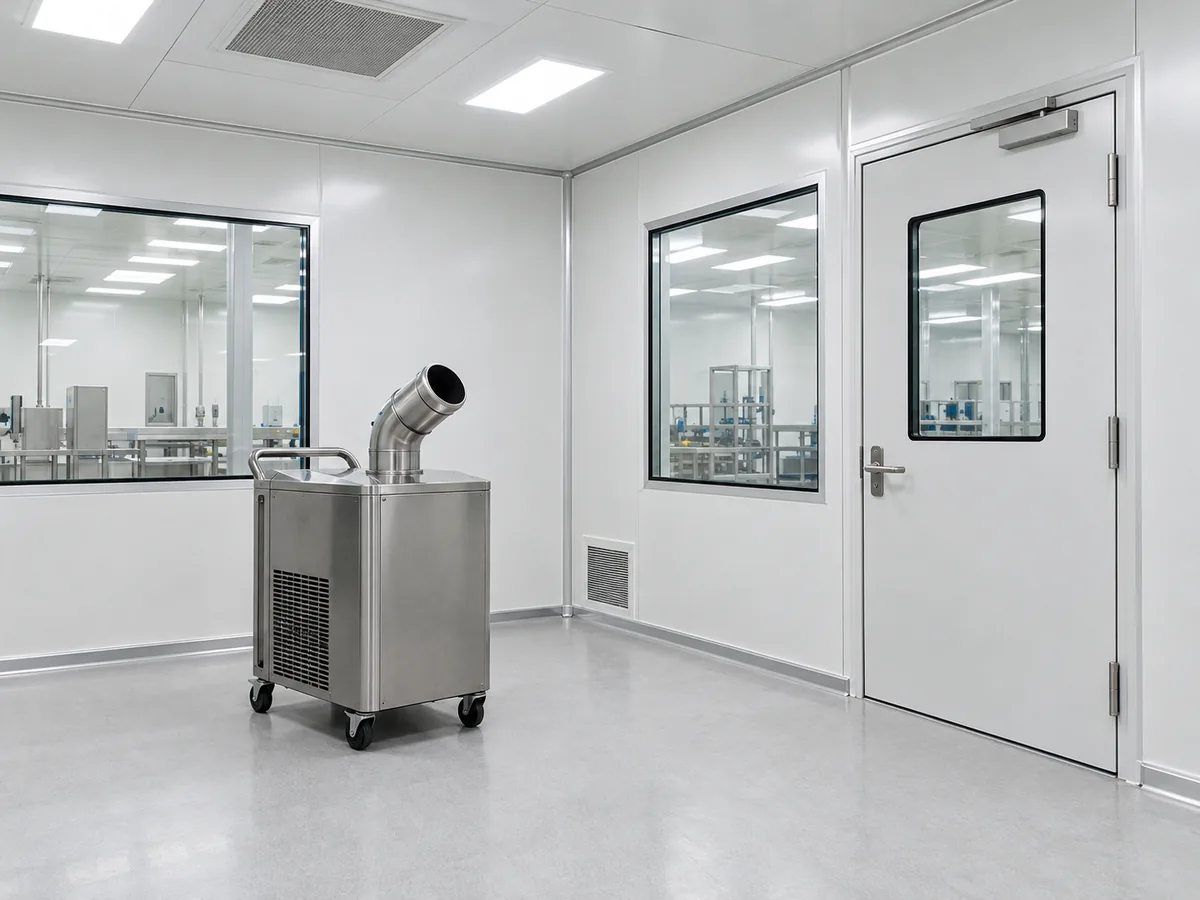
AILV offers the PVDF-VHP Shield panel for projects considering PVDF-coated facings. For a vapour hydrogen peroxide cycle, provide the concentration, humidity, temperature, dwell time and expected number of cycles. Review the specified coating, seals, door frames and penetrations together, and request evidence applicable to the actual construction. Data for a raw PVDF resin or liquid peroxide does not by itself verify the finished panel’s performance in a VHP cycle.
How Does VHP Differ From Liquid Peroxide?
Vapour hydrogen peroxide (VHP) cycles and liquid peroxide cleaning are different exposure conditions. State the product or process, vapour concentration, temperature, humidity, dwell time, number of cycles, aeration and any condensation. Liquid-resin data cannot by itself establish the outcome of repeated VHP cycles on a coated panel, seals or adjacent materials.
1. Name the Cleaner
List the commercial product, active ingredients, dilution, pH and safety data sheet.
2. Define the Cycle
Give contact time, temperature, frequency, application method and the rinsing or wipe-down procedure.
3. Match the Assembly
Record facing grade and coating system, colour, joints, sealant, frames and exposed fasteners.
4. Review Evidence
Request relevant supplier cleaning guidance and exposure evidence for the proposed configuration; agree any project-specific sample evaluation before use.
Request a Material Compatibility Review
AILV offers project-specified coated-metal facings, including its PVDF-VHP Shield panel. Send the room use, panel and finish, disinfectant details and cycle conditions with the project quotation inputs. Compare the full construction using the panel selection guide.
Discuss Your Cleaning Requirements
For enclosure design and site coordination, see the Cleanroom Enclosure Design White Paper and Panel Installation Guide.
Sources
- Arkema: Kynar® PVDF chemical resistance chart — named resin grades, concentrations and maximum reference temperatures.
- International Molybdenum Association: Cleaning and maintaining stainless steel — chloride and bleach exposure considerations.
- CDC: Chemical disinfectants — peracetic acid and material compatibility.
- AkzoNobel: Maintenance and care of pre-painted metal — cleaning of coating systems.
- Dow: Silicone building sealant FAQ — variables affecting sealant exposure.
Prepared by AILV · 29 October 2026. Third-party references are used for general technical context and are not AILV product test certificates.