A cleanroom controls airborne particles. Its classification depends on the measured particle concentration. The room design, air systems and working procedures limit the particles that enter, form or remain inside.
Temperature, humidity, pressure and other contamination controls are specified according to the process. A visibly tidy room is not enough: a classified cleanroom needs defined conditions and verification.
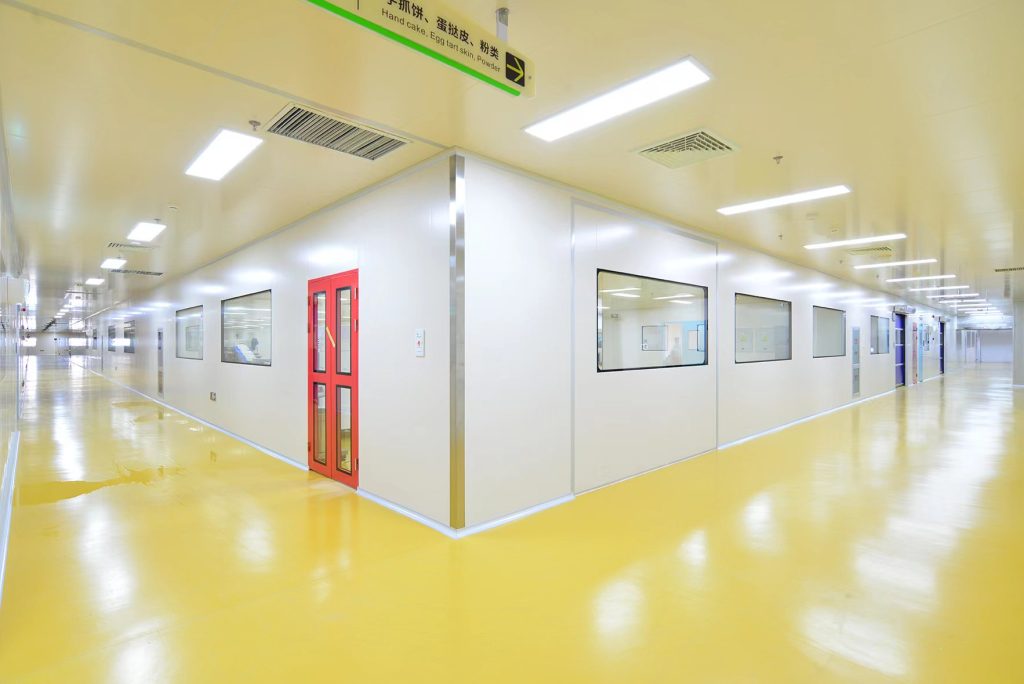
Cover photograph: Anhui bakery workshop, China. Enclosure application in a food production facility.
How Does a Cleanroom Work?
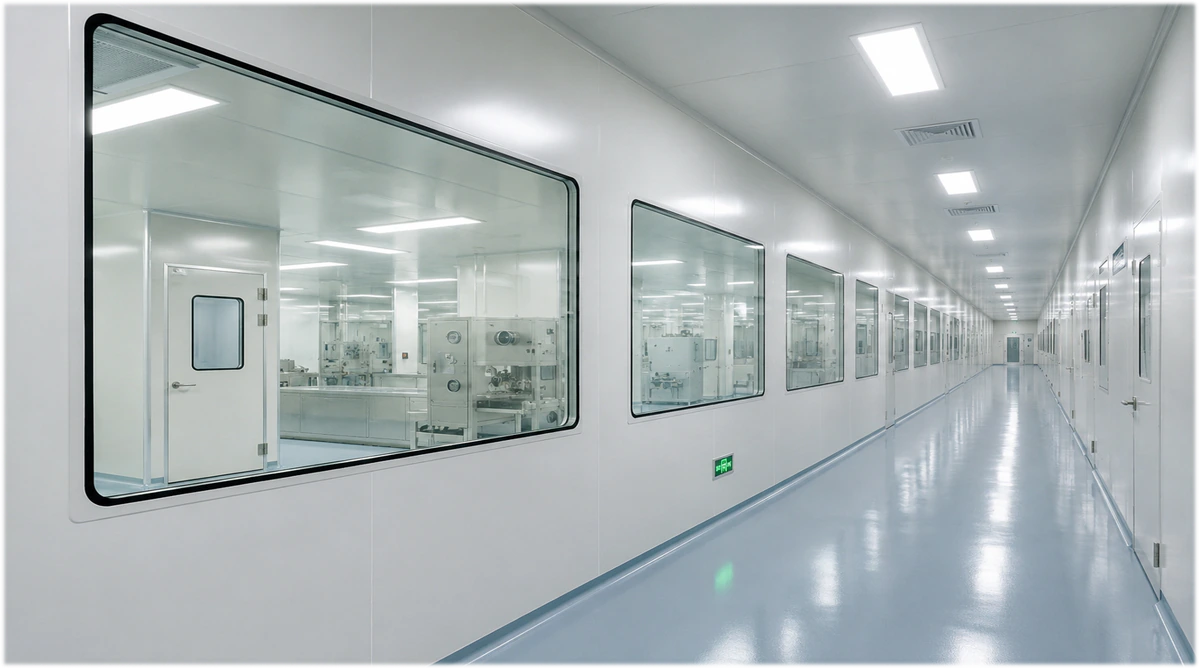
Cleanroom control combines suitable air treatment with a room layout and working methods that reduce contamination. The ASHRAE Clean Spaces chapter describes how airflow, pressure, contamination sources and the process layout interact.
Filtered Air
Air filtration reduces particles entering the controlled area.
Protected Work Zone
Air distribution supports the required conditions around the process.
Return or Exhaust
Air is routed through the designed return or exhaust path.
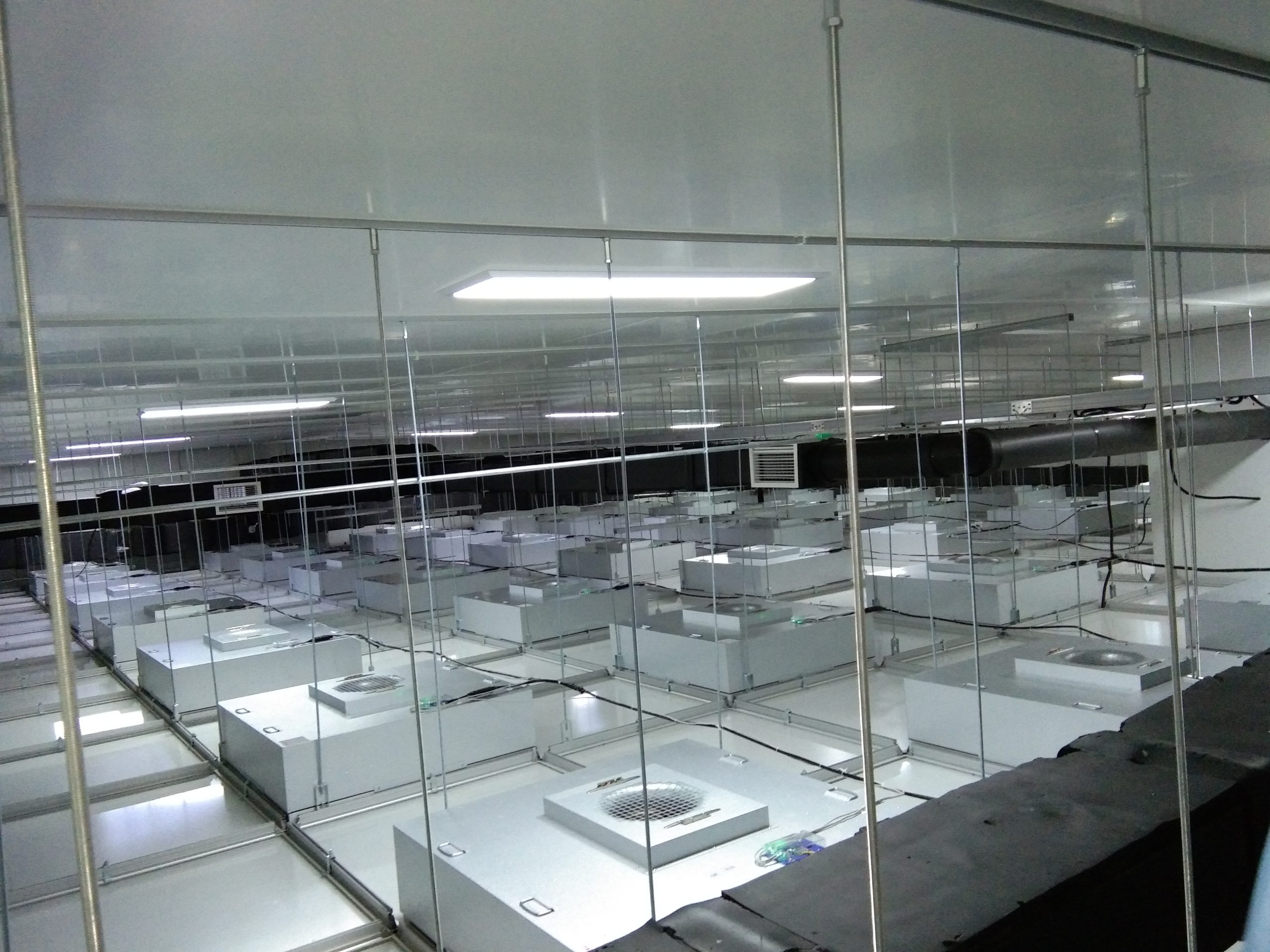
General air-path concept. Actual flow patterns, recirculation, exhaust and pressure relationships are designed for the application.
Control the Air
Filtration, supply and return locations, equipment and heat loads are reviewed together. HEPA filtration is commonly used; filter selection and airflow are engineering decisions.
Control Entry and Activity
People, clothing, equipment and materials introduce particles. Gowning, transfer procedures, cleaning and monitoring support the room conditions. NASA Goddard’s gowning example explains the role of clothing and personnel in its spacecraft cleanrooms.
Positive pressure can protect a cleaner area from adjacent spaces. Containment applications may need a different pressure strategy, as described for sterile-drug facilities in Health Canada’s Annex 1 guidance. No single pressure or temperature setting suits every cleanroom.
What Do ISO Cleanroom Classes Mean?
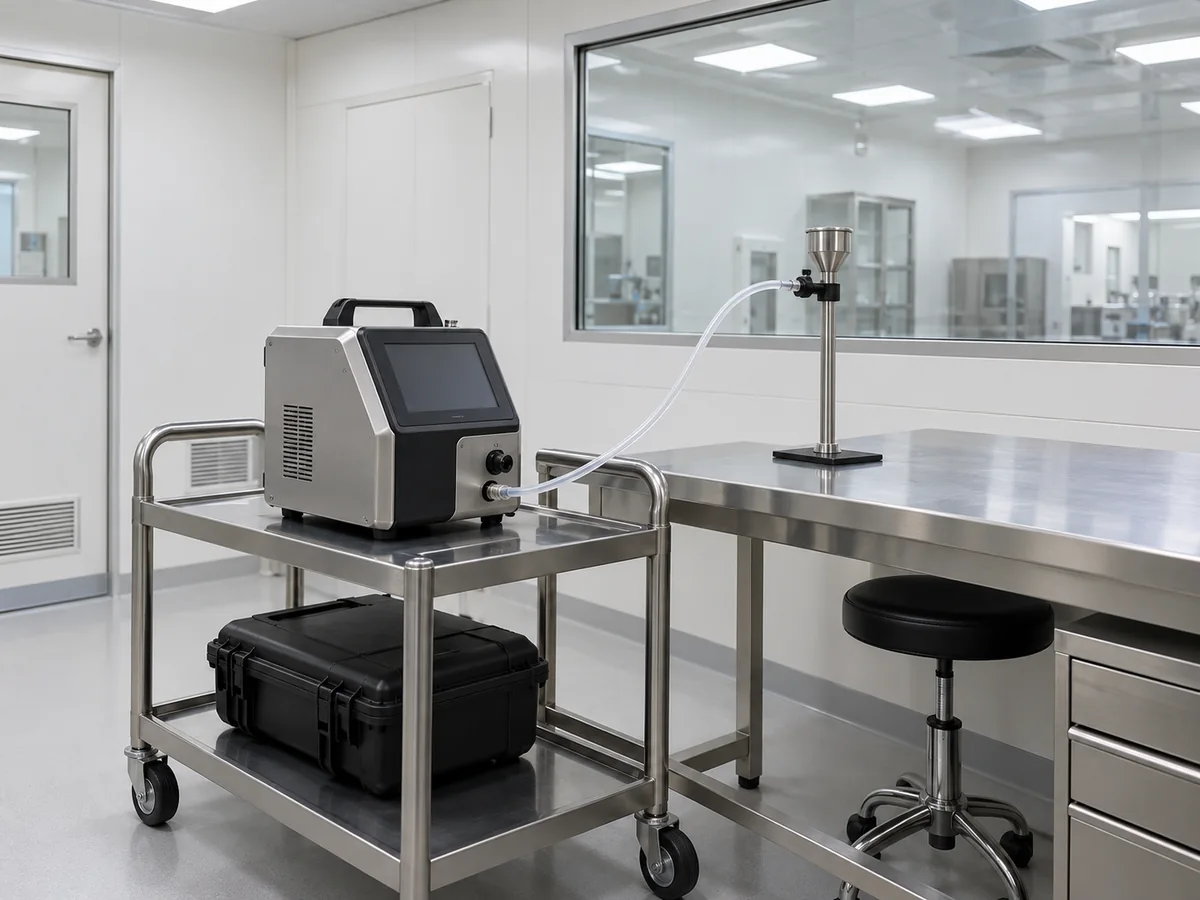
ISO 14644-1:2015 classifies air cleanliness by particle concentration at specified particle sizes. At the same particle-size threshold, a lower ISO class number means a lower permitted concentration.
| Illustrative Class | Maximum Particles ≥ 0.5 μm per m³ |
|---|---|
| ISO 5 | 3,520 |
| ISO 7 | 352,000 |
| ISO 8 | 3,520,000 |
Reference values shown in FDA’s aseptic-processing guidance, Table 1. These examples illustrate the particle scale. A complete project specification must define the applicable limits and test conditions.
State the ISO class, particle size and test condition in the specification. Was the room as-built, at rest or in operation? Compare measurements taken under the same conditions.
A particle classification does not establish sterility or complete pharmaceutical compliance. For aseptic sterile-drug facilities, FDA’s CGMP Q&A explains that relying on ISO 14644-1 and ISO 14644-2 alone is not sufficient to qualify an aseptic facility under CGMP.
What Systems Make Up a Cleanroom?
The Room Enclosure
Walls, ceilings, doors, windows, floors and service penetrations form the room boundary. Junctions and finishes need to support the specified cleaning and room conditions.
Air and Environmental Controls
Air-handling equipment, filters, distribution, returns, exhaust and controls are coordinated with process requirements and the surrounding facility.
People and Material Routes
Layouts account for entry, changing, transfer, processing and removal. The required separation depends on the product and contamination risks.
Operation and Verification
Cleaning, training, maintenance, monitoring and specified testing are part of maintaining the environment after construction.
Where Are Cleanrooms Used?
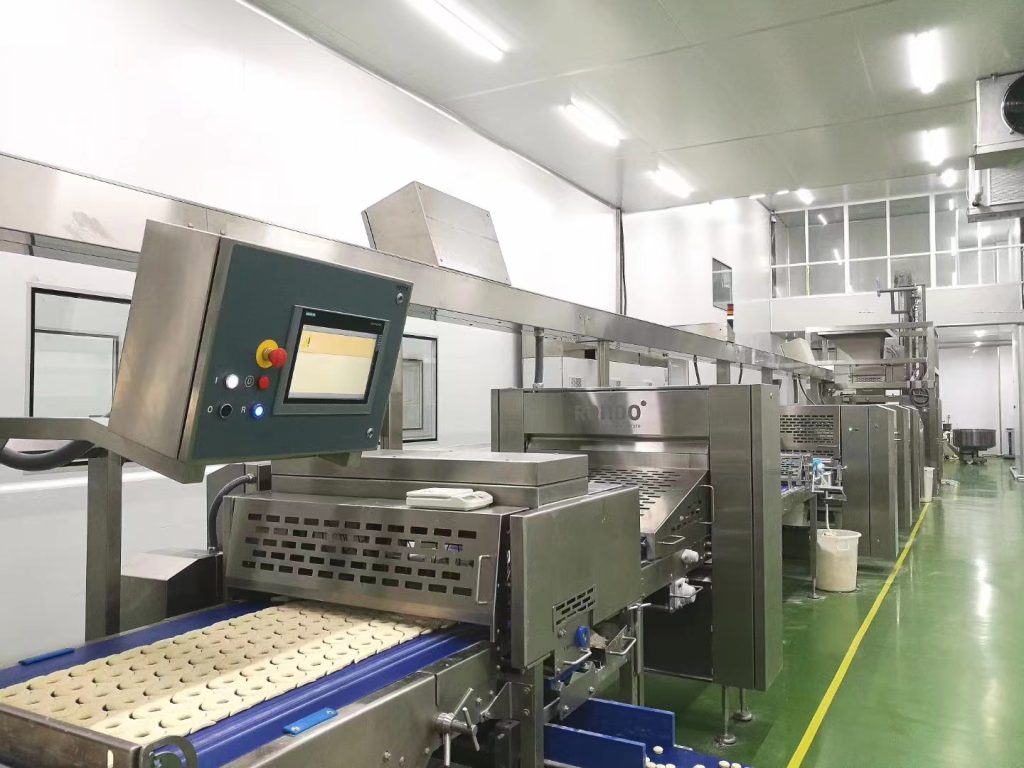
Cleanrooms and related controlled environments support processes sensitive to contamination. The necessary controls differ by product and operation.
- Electronics and optics: particle-sensitive manufacturing, assembly and inspection.
- Pharmaceuticals and medical devices: defined production or assembly environments, with additional controls where required.
- Laboratories and aerospace: controlled handling, analysis or precision assembly.
- Food and cosmetics: selected processing or packing zones based on hygiene and process risks.
Use the industry solutions to identify your application. An entire industry should not be assigned one universal ISO class.
What Is a Modular Cleanroom?

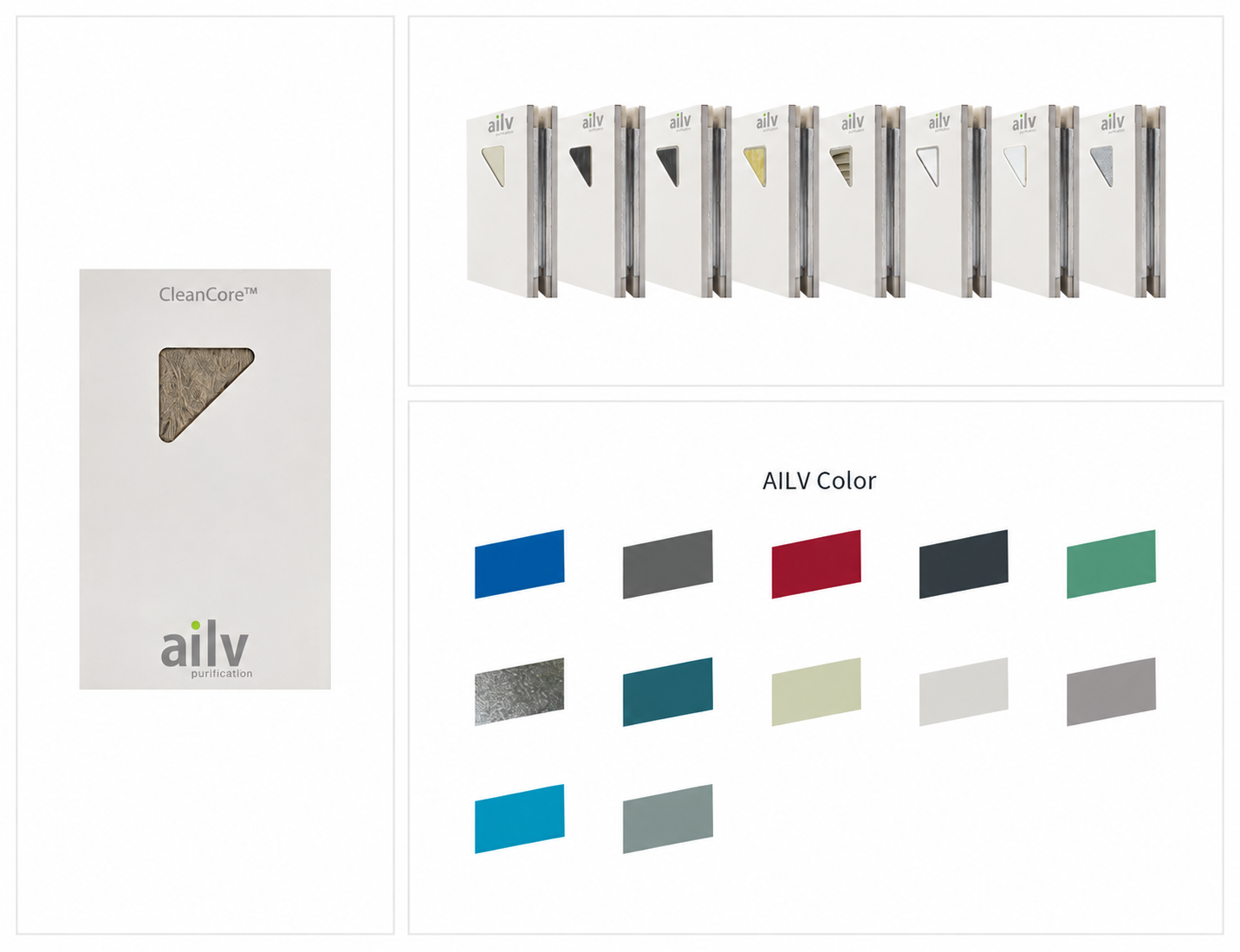
A modular cleanroom uses prefabricated wall panels, ceiling modules, doors and windows. The project drawings show how these parts fit together.
The enclosure still needs to work with the air systems, supports, services and operating procedures. A cleanroom panel is one component of that system; purchasing panels alone does not establish a room classification.
Compare AILV panel options or read what an enclosure package includes.
What Should You Confirm Before Planning a Cleanroom?

Start with the process rather than a panel name or an assumed ISO class. Prepare:
- The product, room functions, contamination risks and applicable requirements.
- Layouts, equipment, personnel and material routes, and service openings.
- Required environmental conditions, testing states and acceptance responsibilities.
- The supply, installation, air-system and qualification boundaries.
The quotation information checklist helps organise the enclosure inputs.
What Does AILV Supply for a Cleanroom?
AILV makes handmade and machine-made cleanroom panels in Anji, China. It also supplies matching doors, windows and enclosure components. Use the proposal to confirm the supply package and project support. Agree who handles air systems, installation and qualification.
Related Questions
Is a cleanroom the same as a sterile room?
No. Airborne particle classification and microbial control address different measurements. Sterile manufacturing needs process-specific controls and evidence beyond a particle class.
Can an existing workshop become a cleanroom?
A retrofit needs a review of space, services, airflow, access, contamination risks and operating constraints. The project team should confirm feasibility and the acceptance criteria before selecting components.
How is a cleanroom checked?
Testing is planned against the specified room conditions. Particle classification is one part; filter integrity, airflow, pressure relationships and other tests are selected for the applicable design and use.
Discuss Your Cleanroom Project
Share the application, available layout and enclosure requirements. AILV can review the panel package and coordinate the proposed scope with your project team.
Send Project RequirementsTechnical Sources and Further Reading
- ISO 14644-1:2015: airborne particle classification
- ASHRAE Handbook: Clean Spaces
- FDA: Aseptic Processing Guidance, Table 1
- FDA: CGMP Production and Process Controls, Q&A 6
- Health Canada: Annex 1, premises and qualification
- NASA Goddard: Cleanroom Gowning and Personnel Practices
Sources reviewed 27 October 2026. Technical references describe their stated applications; final project requirements and available product evidence must be confirmed separately.